
Table of Contents
- What Shih Tzu Carriers Need to Get Right
- Shih Tzu Backpack Carrier: Hands-Free for Longer Walks
- Shih Tzu Sling Carrier: Close Contact for Quick Errands
- Carrier Size for a 15-Pound Dog: Measuring Your Shih Tzu
- Airline-Approved Carrier for Small Dogs: What to Check
- Ventilation, Heat, and Flat-Faced Breathing
- Getting Your Shih Tzu Used to the Carrier
- Frequently Asked Questions
Last Updated: October 12, 2026
What Shih Tzu Carriers Need to Get Right
Shih Tzu carriers are bags, backpacks, or slings designed to hold a small dog securely against or on your body during travel. The right one keeps a flat-faced breed cool, calm, and contained.
Shih Tzus bring a specific set of needs to any carrier. They weigh roughly 9 to 16 pounds as adults, sit low to the ground, and have short noses that make overheating a real risk.
Below, we break down carrier styles, measurements, airline checks, and acclimation steps. We also flag the mistakes that send most buyers back for a second purchase.
Shih Tzu Backpack Carrier: Hands-Free for Longer Walks
Backpack carriers win when you need both hands and a longer route.
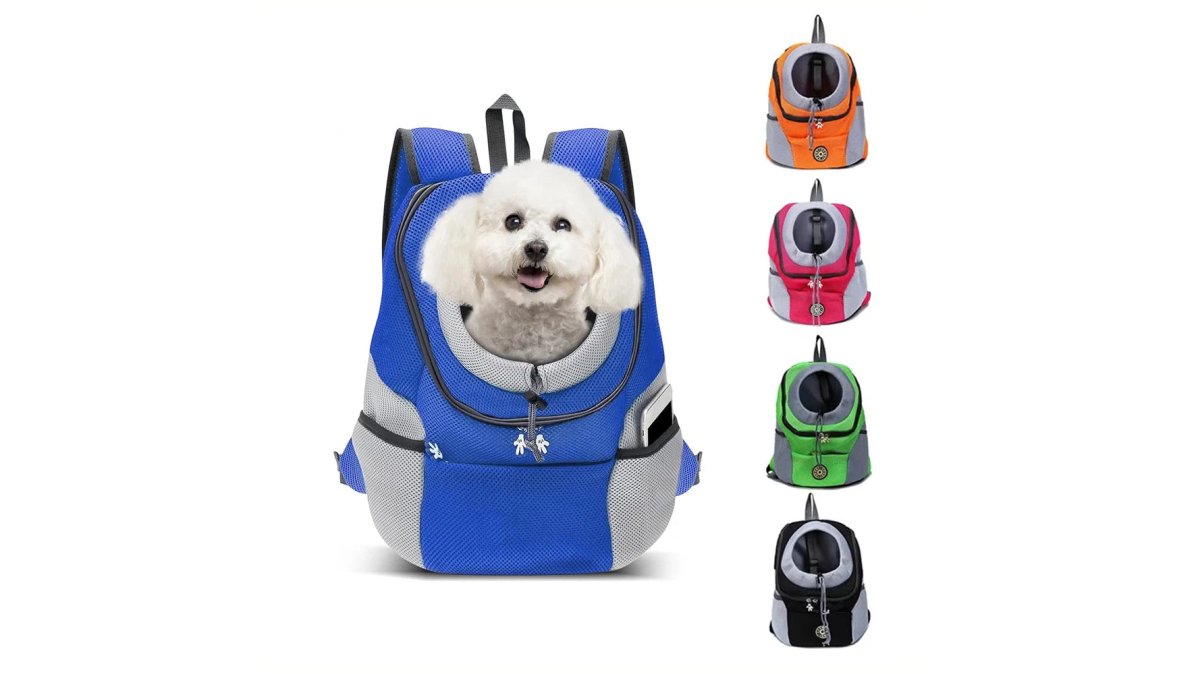
The Proud Pet Shop TrailFold Carrier is built for exactly this. Wear it front-facing for bonding on short trips or shift to back mode for heavier loads.

Two details matter most on a backpack. Look for mesh panels on the sides and front so air moves constantly, and check for an interior safety leash clip.
Shih Tzu Sling Carrier: Close Contact for Quick Errands
A sling carrier suits quick trips: the vet, a coffee run, a short errand. The dog rides against your chest or hip in a crossbody bag, and you keep both hands free.
The Proud Pet Shop Sidekick Sling holds pets up to 15 pounds, which covers most adult Shih Tzus. It closes with a soft buckle, includes a breathable panel to keep the passenger cool, and the adjustable strap fits most body sizes.

Slings work best for 20 to 40 minute outings. For anything longer, a backpack gives better weight distribution and more interior room.
| Carrier Style | Best For | Weight Limit | Hands-Free |
|---|---|---|---|
| Backpack (TrailFold) | Long walks, hikes, markets | Sizes S, M, L | Yes, front or back |
| Sling (Sidekick) | Vet visits, errands, short trips | Up to 15 lbs | Yes, crossbody |
Carrier Size for a 15-Pound Dog: Measuring Your Shih Tzu
Carrier size for a 15-pound dog comes down to four measurements, not the weight on the label. Weight tells you almost nothing about whether a Shih Tzu will fit, because the breed's compact, low-slung build varies widely at the same poundage. A 15-pound Shih Tzu can be long and shallow or short and deep, and one carrier will not fit both.
How to measure your Shih Tzu
Use a soft tape measure and a flat surface. Take each measurement twice and use the larger number.
- Body length, from the point of the chest (the front of the breastbone) to the base of the tail, along the side of the body. Do not measure the tail.
- Standing height, from the floor to the top of the head, with the dog standing naturally, not sitting or crouching.
- Chest girth, around the widest part of the ribcage, just behind the front legs. This is the measurement most buyers skip and the one that causes the most returns.
- Shoulder width, across the widest point of the shoulders, which tells you whether the dog can turn around inside the bag.
For a typical adult Shih Tzu, expect roughly 10 to 14 inches of body length, 8 to 11 inches of standing height, and 14 to 18 inches of chest girth. Puppies will be smaller; a 4-month-old may measure 6 to 8 inches in length and 5 to 7 inches in height.
Match the numbers to the carrier's interior
Compare your dog's measurements against the carrier's interior dimensions, not its exterior. A bag that looks generous from outside can pinch once the fabric compresses and the padding takes up space.
The fit test is simple: your Shih Tzu should be able to stand without crouching, turn around completely, and lie down flat with the head resting on the floor of the bag. If any of those three fails, size up.
Add a buffer.
Why girth matters more than weight for this breed
Shih Tzus carry weight low and wide. Two dogs at 15 pounds can differ by 3 or 4 inches of girth, and a carrier rated "up to 15 lbs" may still be too narrow across the chest. If your dog's girth is near the top of a carrier's stated range, treat that carrier as one size too small.
Quick reference by size
| Dog | Body Length | Standing Height | Chest Girth | Carrier Interior Needed |
|---|---|---|---|---|
| Teacup / small adult | 8-10 in | 6-8 in | 12-14 in | 10-12 in L x 8-10 in H |
| Average adult | 10-12 in | 8-10 in | 14-16 in | 12-14 in L x 10-12 in H |
| Large adult | 12-14 in | 10-11 in | 16-18 in | 14-16 in L x 12-13 in H |
Measure your dog, write the numbers down, and take that list shopping. It is the single fastest way to avoid a second purchase.
Airline-Approved Carrier for Small Dogs: What to Check
An airline-approved carrier for small dogs must fit under the seat in front of you and meet the airline's own size limit. There is no single universal standard, and rules change by carrier, aircraft, and cabin. What matters is that you verify the numbers for your specific flight before you book.
Proud Pet Shop TrailFold Carrier →
The under-seat dimensions you are actually working with
Most domestic mainline jets have under-seat space in economy that is roughly 17 to 18 inches long, 10 to 11 inches wide, and 8 to 9 inches tall, though this varies by aircraft and seat. Regional jets and bulkhead or exit-row seats are often tighter.
Measure your carrier with the dog inside, not empty. A bag that compresses to 8 inches flat may sit at 10 inches once your Shih Tzu is in it, and that is the number the gate agent sees.
How to verify before you book
- Find the aircraft type on your itinerary (for example, a 737 or an A320). Under-seat space differs between them.
- Check the airline's pet travel page for its published in-cabin carrier size limit and its carry-on pet policy.
- Call the airline and confirm three things: the maximum under-seat dimensions for your specific aircraft, whether the pet counts as your carry-on or as a separate item, and whether a health certificate or advance reservation is required.
- Book early. Most airlines cap the number of in-cabin pets per flight, and the limit is often small.
What the airline will expect at the gate
Most domestic airlines require the pet to stay in the carrier for the full flight, including taxi and takeoff. The carrier must be secure, and the dog must remain inside it. Soft-sided carriers generally work better than rigid ones for cabin travel because they compress to fit tight spaces, but check that yours has secure zippers, a determined Shih Tzu can work a loose closure open.
Airlines commonly charge a one-way pet fee per carrier, and the amount varies by carrier and route. Confirm the current fee when you book rather than assuming it is included in your ticket.
Brachycephalic breeds and cabin travel
Shih Tzus are a flat-faced (brachycephalic) breed, and some airlines restrict or ban brachycephalic dogs from cargo, and a few restrict them from cabins on certain routes. Check the airline's breed policy before you book. If cabin travel is allowed, keep the flight as short as practical, avoid the hottest part of the day, and make sure the carrier's mesh panels are unobstructed so air moves freely.
U.S. Department of Transportation airline pet travel guidance
A pre-flight checklist
- Carrier interior fits your dog with room to stand and turn
- Carrier compresses to the airline's under-seat height with the dog inside
- Zippers lock or clip shut
- Mesh on at least two sides, unobstructed
- Airline pet reservation confirmed and fee paid
- Health certificate or vaccination records on hand if required
- Absorbent pad in the bottom of the carrier
Run through this list the week before you fly, not at the gate.
Ventilation, Heat, and Flat-Faced Breathing
Ventilation is not a nice-to-have for Shih Tzus. It is the deciding factor. Flat-faced breeds move air less efficiently, so a stuffy carrier turns a mild day into a risk.
Look for carriers with mesh on at least two sides, and never zip a dog into a closed fabric panel for long. The American Veterinary Medical Association guidance on heat safety notes that flat-faced breeds face higher risk of heat-related distress.
A breathable panel, like the one on the Sidekick Sling, keeps air moving against your dog's body. In a backpack, the front and side mesh on the TrailFold Carrier does the same job.
Getting Your Shih Tzu Used to the Carrier
Carrier training takes patience, and Shih Tzus respond well to a gradual approach. Start days before your trip, not the morning of.
- Leave the carrier open on the floor with a favorite toy inside
- Feed one meal next to or inside the carrier
- Zip the door for 30 seconds, treat, then open
- Carry your dog around the house for two minutes
- Take a short walk outside, then extend the time
- Do one full practice trip before the real one
A common mistake is forcing a nervous dog in and zipping it shut. That teaches the carrier means fear. Let the dog choose to enter, reward calm behavior, and build duration slowly.
Once your dog settles, a carrier becomes a safe space rather than a cage. That makes every vet visit and road trip easier. Browse the full Proudpetshop carrier range to match your dog's size and your travel style.
Choosing the wrong Shih Tzu carrier costs you twice: once at checkout and again when your dog refuses to ride in it. At Proudpetshop, we stock carriers built for small pets, including the front-and-back TrailFold Carrier and the 15-pound Sidekick Sling, both backed by a 30-day satisfaction guarantee and free shipping on orders over $50.
Frequently Asked Questions
How do I choose the right size carrier for my Shih Tzu?
Measure your dog standing, from the base of the neck to the base of the tail, plus their height at the shoulder and chest circumference. Shih Tzus typically weigh 9 to 16 pounds, so most fit a small carrier, but a 15-pound dog may need a medium. The carrier should let your dog stand, sit, and turn around without crouching. Always compare measurements against the carrier's listed dimensions rather than relying on weight alone.
Are backpack carriers safe for Shih Tzus?
Yes, when the carrier fits correctly and includes a safety leash attachment clipped to your dog's harness. Backpacks work well for walks because weight sits on your shoulders and back, not one arm. Check that mesh panels allow steady airflow, since Shih Tzus are a flat-faced breed that overheats more easily than dogs with longer snouts. Keep walks shorter on warm days and never zip a dog in without ventilation.
Is a sling or backpack better for carrying a Shih Tzu?
A sling suits short trips, such as vet visits or errands, because your dog stays close to your body and you keep both hands free. A backpack handles longer walks and heavier loads better, since the weight distributes across both shoulders. For a Shih Tzu near the top of the breed's weight range, a backpack is usually the more comfortable option for the person carrying. Many owners keep both for different situations.
Can a Shih Tzu travel in an airline-approved carrier?
Many Shih Tzus fly in the cabin because they fit under the seat, but approval comes from the airline, not the carrier alone. Check your specific airline's under-seat dimensions before buying, since these vary by aircraft and cabin class. Most airlines require the pet to stay inside the carrier for the whole flight and charge a pet fee. Confirm the current rules directly with your airline before booking.