
Table of Contents
- How to Tell Your Dog Is a Power Chewer
- Why Some Dogs Destroy Toys So Fast
- Best Chew Toys for Aggressive Chewers
- How to Choose a Safe Dog Chew Toy
- Dog Chew Toy Size Guide
- Signs a Dog Toy Needs Replacing
- Chew Toy Safety: Supervision, Choking Risks, and Tooth Damage
- Conclusion
- Frequently Asked Questions
Last Updated: October 17, 2026
How to Tell Your Dog Is a Power Chewer
A power chewer is a dog that attacks toys with real force, working through plush, rope, and thin rubber in minutes rather than weeks. If your dog needs a tougher chew toy, the signs show up fast: shredded seams, missing chunks, and a toy that's gone before you finish your coffee.
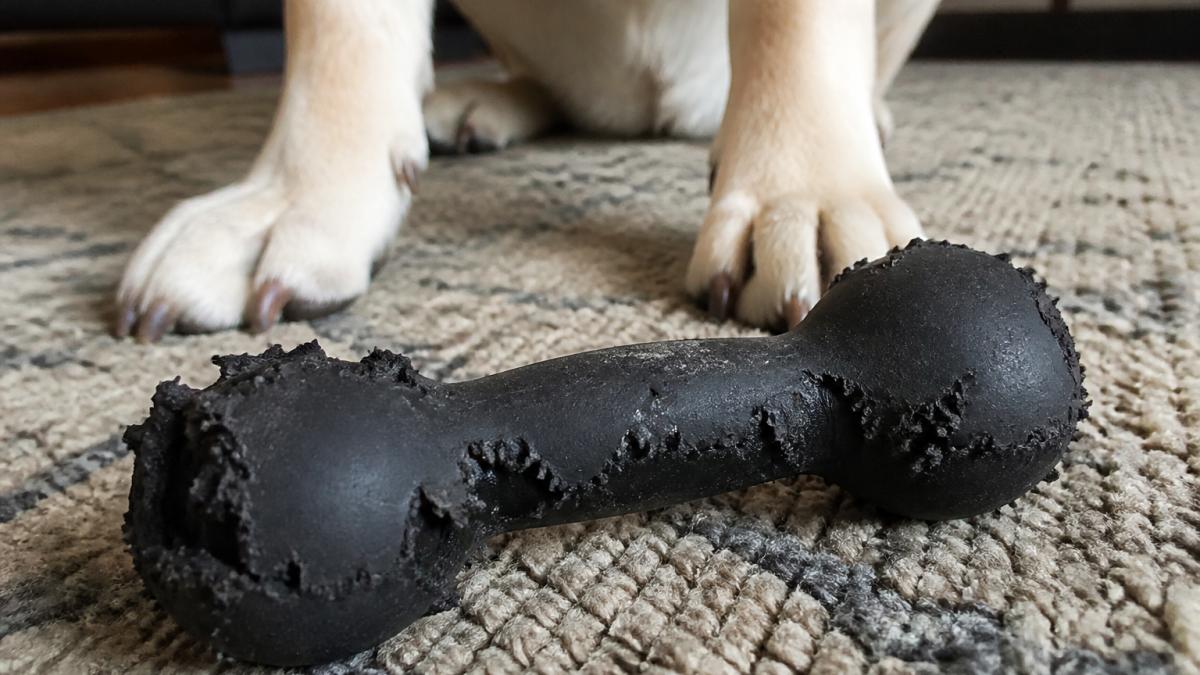
At Proudpetshop, we hear from owners every week who say their dog destroys toys in 20 minutes. They want to know if a tougher chew toy can actually survive. Sometimes yes.
Here's the part most guides get wrong: toughness alone isn't the goal. A toy can be too hard, and that's where teeth get hurt.
Below, we'll walk through the eight signs that tell you it's time to upgrade, how to spot real toy failure versus normal wear, and a step-by-step process for picking a safe, long-lasting chew toy.
The 8 Signs Your Dog Needs a Tougher Chew Toy
Watch for these signals. Any two or three together mean your current toy isn't keeping up.
- Deep tooth marks pressed into rubber within a single session
- Chunks missing from the toy's edges or ends
- Seams split open and stuffing pulled out
- The toy is flat or deflated after one or two chewing sessions
- Your dog loses interest fast because the toy gives way too quickly
- You're replacing toys weekly, not monthly
- Your dog gulps down pieces instead of spitting them out
- Your dog competes for toys with other dogs and chews harder to guard them
That last one matters in multi-dog homes. Competition ramps up chewing strength, so a toy that survives solo play may fail in a group.
Toy Failure vs. Normal Wear: How to Tell the Difference
Normal wear looks like surface scuffing, faded color, and light tooth marks that don't change the toy's shape. Toy failure looks different, and it's the difference between a toy that's aging and one that's become a hazard.
- Normal wear: smooth edges, small surface nicks, no loose pieces
- Failure: cracks that spread, holes that widen, pieces that tear free
- Failure: the toy bends or crushes under light pressure
A common mistake is waiting until a toy is shredded to replace it. Once a toy has a hole big enough for a tooth or a chunk to pass through, it's done. That's not wear.
Why Some Dogs Destroy Toys So Fast
Chewing strength varies wildly between dogs, and it comes down to a few things. Jaw size, bite force, breed history, and how a dog plays all feed into it.
Herding and terrier types often chew in short, intense bursts. Larger breeds with big jaws apply more pressure per bite.
Then there's the toy itself. A thin rubber toy labeled "indestructible" often isn't. Many toys are built for gentle chewers and marketed to everyone.
Best Chew Toys for Aggressive Chewers
The best chew toys for aggressive chewers share three traits: dense natural rubber, a solid one-piece build, and no small parts that can break off. Skip anything with squeakers, fabric, or thin seams.
Material choice drives durability more than brand or price. Here's how the main options stack up:
| Material | Durability | Best For | Watch Out For |
|---|---|---|---|
| Dense natural rubber | High | Power chewers | Check for cracks after heavy sessions |
| Nylon | High | Determined chewers | Too hard for some dogs; can chip teeth |
| Rope | Medium | Tug and light chewing | Frayed strands can be swallowed |
| Plush and fabric | Low | Gentle chewers | Rips fast with strong jaws |
| Edible chews | Varies | Enrichment | Digestive upset if overdone |
A tough toy doesn't have to be a hard toy. Dense rubber flexes slightly under pressure, which is easier on teeth than solid nylon. For dogs that destroy everything, rubber is usually the safer starting point.
How to Choose a Safe Dog Chew Toy
Safety comes down to three checks: material, size, and supervision. Get those right and you avoid most problems.
Start with non-toxic materials. Look for toys labeled free of BPA, phthalates, and lead. A safe toy should flex a little when you press it with your thumbnail.
Next, match the toy to your dog's chewing strength and chew behavior. A dog that gnaws steadily needs a different toy than one that chomps and shakes.
A Step-by-Step Toy Selection Process
Follow these steps in order. Each one narrows the field.
- Check your dog's mouth. Look for tooth marks, chips, or loose teeth before buying anything new.
- Rate chew strength. Gentle, moderate, or power chewer. Be honest.
- Measure your dog's mouth to pick the right size (see the guide below).
- Pick a material that matches the rating: rubber for power chewers, softer options for gentle ones.
- Press-test the toy. It should give slightly under your thumb, not feel like a brick.
- Buy one toy first. Test it for a week before stocking up.
- Set a replacement reminder. Check the toy after every session for cracks or holes.
Dog Chew Toy Size Guide
Size is where a lot of owners get it wrong. A toy that's too small becomes a choking risk. A toy that's too big is hard to grip and gets ignored.
Use this dog chew toy size guide as a starting point:
- Toy should be longer than your dog's muzzle so it can't be swallowed whole
- Small dogs (under 20 lbs): small to medium toys, but never small enough to fit fully in the mouth
- Medium dogs (20-50 lbs): medium toys with a solid core
When in doubt, size up. A slightly larger toy is safer than one your dog can gulp down.
Signs a Dog Toy Needs Replacing
Most guides give you a vague list: cracked, chewed, done. That's not enough to make a real decision. The useful skill is separating normal wear from toy failure, because one means the toy is aging, and the other means it's a hazard you need to remove today.
Proud Pet Shop Cooling Recovery Mat →
Normal Wear vs. Toy Failure: A Side-by-Side Check
Run this comparison after every chewing session. It takes about 10 seconds.
| What You See | Normal Wear | Toy Failure, Remove It |
|---|---|---|
| Surface | Light scuffing, faded color, shallow tooth marks | Deep gouges, cracks that spread when you bend the toy |
| Edges | Smooth, rounded | Sharp, jagged, or peeling |
| Holes | None | Any hole wider than a pencil, or a hole that widens under pressure |
| Pieces | None loose | Loose flaps, chunks, or fragments your dog can fit in its mouth |
| Shape | Holds its shape | Bends, crushes, or stays deformed under light thumb pressure |
| Stuffing | None exposed | Stuffing pulled out or accessible through a seam |
| Rope | Tightly braided | Frayed strands coming free |
A common mistake is waiting until a toy is shredded. Once a toy has a hole big enough for a tooth or a chunk to pass through, it's done. That's not wear, that's a choking risk.
The 3-Second Bend Test
Bend the toy with both hands. If it flexes and springs back, it's still in service. If you feel a crack propagate, hear a tear, or the toy stays bent, retire it. This one test catches most failures before your dog does.
The Replacement Rule
Replace the toy when any of these is true:
- A crack spreads when you bend the toy
- A hole is wider than a pencil
- A chunk or fragment is missing or loose
Chew Toy Safety: Supervision, Choking Risks, and Tooth Damage
Supervision is the one safety habit that covers everything else. Even the toughest toy can fail, and a dog can swallow toy pieces in seconds. But supervision only helps if you know what to watch for and what to do when something goes wrong.
Choking and Ingestion Risk
Choking risk rises with small toys, worn toys, and multi-dog households where dogs compete for toys. The highest-risk moments are when a toy first fails, a seam splits, a chunk tears free, or a rope frays, because the loose piece is new and interesting.
Watch for these signs during and after chewing:
- Gagging, coughing, or pawing at the mouth
- Drooling more than usual
- Pawing at the mouth or rubbing the muzzle on furniture
If you see any of these, stop the chewing session and check the mouth.
Tooth Damage: The Other Side of Toughness
Toys that are too hard can cause a tooth fracture, a chipped tooth, or wear down enamel over time. The risk is highest for older dogs, dogs with worn enamel, and dogs that chew in long, steady sessions.
A practical hardness check: press the toy with your thumbnail. It should give slightly, like a dense rubber eraser. If it feels like a brick or a hard plastic, it's a tooth-fracture risk for most dogs.
What to Do If Your Dog Swallows Toy Material or Shows Mouth Pain
Act fast. If your dog swallows toy material, note the size and material, then call your vet or an animal poison control line right away. Don't wait for symptoms.
If your dog shows mouth pain, stop all chewing and check for a loose tooth, a chipped tooth, or a cut gum. A vet visit is the safe call for any broken tooth or ongoing pain.
A 10-Second Post-Chew Check
The single most useful habit is a quick check after each session. Run your fingers along every edge. If you feel a crack, a hole, or a loose flap, the toy is finished. Then check your dog's mouth: look for fresh chips, loose teeth, or gum cuts.
For recovery days and hot weather, a chew-resistant cooling mat gives an active dog a calmer place to settle. Our Proud Pet Shop Cooling Recovery Mat is $28.99, activates with water, and needs no freezer or power, so it's ready whenever your dog needs to cool down after a hard chew session.

Conclusion
Every dog owner hits the same wall: you buy a toy, and it's gone before the week ends. The fix isn't a tougher label.
Every order ships fast and free over $50, backed by a 30-day satisfaction guarantee and a 4.8/5 rating from over 1,200 pet parents.
Get started with Proudpetshop and give your power chewer gear that keeps up.
Frequently Asked Questions
How can I tell if my dog's chew toy is too soft?
Press your thumbnail into the toy. If it leaves an indentation you can feel, it is too soft for a power chewer. Other signs a tougher chew toy is needed: the toy develops holes, tears, or chunks missing within minutes of a chewing session, or your dog can compress it flat with its back teeth. Soft rubber and plush toys are fine for gentle chewers, but heavy chewers will shred them fast. Match the toy to your dog's chewing strength, not just its size.
Can a chew toy be too hard for a dog's teeth?
Yes. Toys harder than your dog's teeth can cause tooth fractures, chipped teeth, and worn enamel. Avoid anything you cannot dent with a fingernail, including antlers, hooves, and hard nylon bones. A safer test is the knee test: if the toy hurts when tapped against your kneecap, it is too hard. Choose durable rubber with some give instead. Watch for drooling, pawing at the mouth, or a drop in appetite, which can signal mouth pain and warrant a vet visit.
When should I replace my dog's chew toy?
Replace a chew toy when it has deep tooth marks, cracks, missing chunks, or exposed inner material. Also replace it if your dog has outgrown it, meaning the toy is now too small to swallow safely. Normal wear looks like shallow scuffs and dulled edges; failure looks like tears, holes, and pieces breaking off. Check toys after every chewing session, and remove any toy your dog can fit entirely in its mouth.
What should I do if my dog swallows part of a chew toy?
Call your veterinarian right away, even if your dog seems fine. Swallowed rubber, nylon, or fabric can cause choking or a blockage in the intestines. Watch for vomiting, drooling, pawing at the mouth, loss of appetite, or straining to defecate. Do not induce vomiting unless your vet tells you to. Bring the toy's packaging or a photo so the vet knows the material and size. After any swallowing incident, retire that toy type and switch to a tougher, correctly sized option.