
Table of Contents
- What Is a Slow Feeder Bowl?
- How Slow Feeders Prevent Bloating and GDV
- Signs of Bloat in Dogs and When to Act
- How to Stop Dog From Eating Too Fast
- Slow Feeder Bowls vs Standard Bowls: Comparison Table
- Vet Recommended Slow Feeders and Design Options
- Pros and Cons of Slow Feeder Bowls
- Transitioning Your Dog to a Slow Feeder
- Frequently Asked Questions
Last Updated: September 24, 2026
What Is a Slow Feeder Bowl?
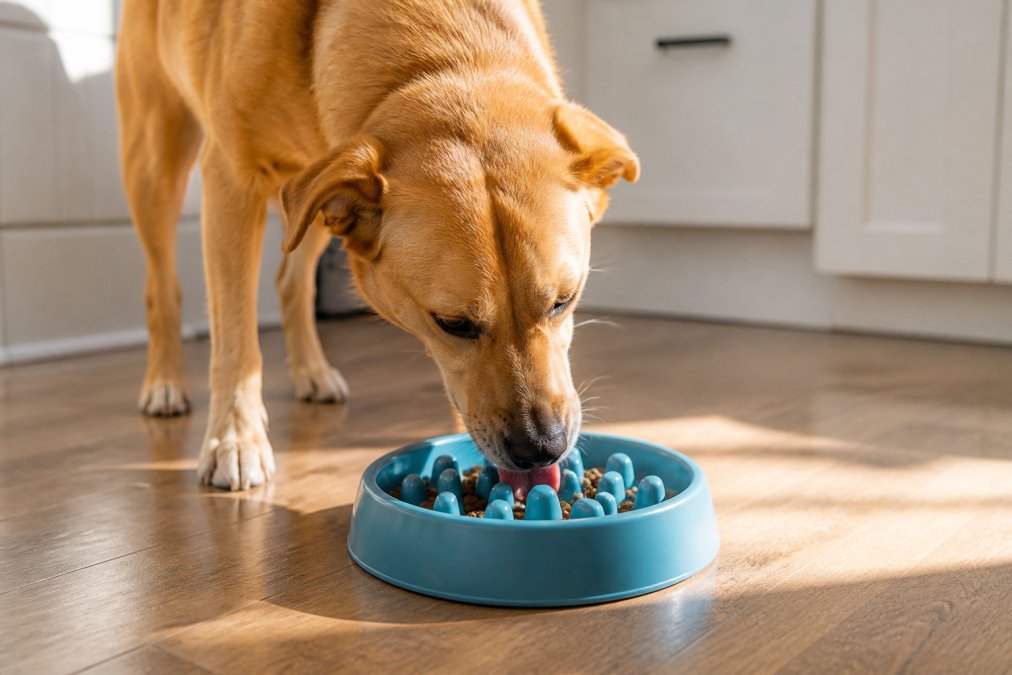
A slow feeder bowl is a specially designed feeding dish with textured ridges, raised patterns, or maze-like compartments that force dogs to eat more deliberately, slowing consumption and encouraging proper chewing, a key advantage when comparing slow feeder bowls vs standard bowls for digestion.
The core difference between slow feeder bowls vs standard bowls for digestion comes down to physics: a standard bowl lets food sit flat and accessible, allowing dogs to inhale meals in 30 seconds or less, while a slow feeder's ridges and patterns require more effort per bite, turning mealtime into a measured process.
The Proud Pet Shop Slow-Feeding System (3-Piece Set) uses food-grade silicone with textured grooves for dogs and cats of all sizes at $15.99, offering an affordable entry point for pet owners concerned about fast eating.

How Slow Feeders Prevent Bloating and GDV
Bloating and gastric dilatation-volvulus (GDV) are related but distinct conditions, and understanding the difference is critical to choosing the right prevention strategy.
Simple Bloating vs. Gastric Dilatation-Volvulus (GDV)
Simple bloating occurs when a dog's stomach fills with gas or food faster than the digestive system can process it, causing discomfort and restlessness. Aerophagia, swallowing air while eating, is the primary driver; a dog that gulps kibble inhales air with each bite, which accumulates in the stomach. The gas typically passes naturally within hours.
Gastric dilatation-volvulus (GDV), by contrast, is a medical emergency. The stomach becomes severely distended with gas or fluid, and then rotates or twists on its axis, cutting off blood supply to the stomach wall and surrounding organs. According to the American Animal Hospital Association emergency protocols, GDV can progress from first symptoms to organ failure and death within 6 to 8 hours if untreated. Surgical intervention is the only treatment, and even with immediate surgery, mortality rates range from 15 to 33 percent depending on how long the stomach has been twisted.
The critical distinction: simple bloating is uncomfortable but self-limiting.
Why Fast Eating Increases GDV Risk
GDV risk is multifactorial. Large-breed dogs with deep chests, German Shepherds, Great Danes, Saint Bernards, Weimaraners, and Standard Poodles, have anatomically larger stomachs and more space for the organ to move within the abdomen. This structural predisposition is genetic and cannot be changed. However, eating behavior directly influences whether that risk materializes.
How Slow Feeders Reduce GDV Risk
A slow feeder bowl forces your dog to work around ridges, mazes, or obstacles, changing eating from gulping to licking. This reduces aerophagia (air intake can drop 60-80 percent), allows gradual stomach filling that reduces peak pressure, and maintains normal gastric motility.
Additional GDV Prevention Measures
Slow feeders are one layer of a multi-factor prevention strategy. Other evidence-based approaches include: avoiding vigorous exercise for 30-60 minutes after eating, dividing daily food into two or three smaller meals, raising the bowl to chest height to reduce air swallowing, and considering prophylactic gastropexy (a surgical procedure tacking the stomach to the abdominal wall) for high-risk breeds with a family history of GDV.
Signs of Bloat in Dogs and When to Act
Early bloat signs are subtle: restlessness, slight belly distension, excessive drooling, or unproductive vomiting attempts. As bloat worsens, rapid breathing, weakness, collapse, or a hard, painful abdomen emerge. If your dog shows any of these signs within an hour of eating, contact a veterinarian immediately, GDV is a medical emergency.
How to Stop Dog From Eating Too Fast
Stopping fast eating requires changing your dog's feeding behavior, not just their bowl. A slow feeder is the foundation, but technique matters too.
Slow Feeder Bowls vs Standard Bowls: Comparison Table
| Feature | Slow Feeder Bowl | Standard Bowl |
|---|---|---|
| Eating Speed | 10-20 minutes | 30 seconds to 2 minutes |
| Air Swallowing | Minimal | High |
| Bloat Risk | Low | High |
| Digestion Support | Improved nutrient absorption | Rapid, incomplete digestion |
| Mental Engagement | Yes, requires work | No, passive consumption |
| Cleaning | Easy (most dishwasher safe) | Very easy |
| Cost | $15.99-$34.99 | $5-$15 |
| Best For | Fast eaters, bloat-prone dogs, anxiety relief | Casual feeders, multi-pet households without bloat risk |
Vet Recommended Slow Feeders and Design Options
Veterinarians recommend slow feeders for dogs with a history of bloating or fast eating. Textured Ridge Bowls work best for dogs with flat or moderate snouts, forcing deliberate licking. Foraging Mats engage natural scent-hunting behavior while providing mental stimulation. Puzzle Feeders combine slow feeding with problem-solving for intelligent, active dogs. Elevated Feeders improve posture and reduce air swallowing. Choose based on your dog's anatomy and temperament: ridge bowls for moderate snouts, foraging mats for anxious dogs, puzzle feeders for high-drive dogs, and elevation for senior dogs with joint issues.
Pros and Cons of Slow Feeder Bowls
Pros:
Proud Pet Shop Slow-Feeding System →
- Reduces bloating and GDV risk by controlling eating speed and air intake
- Improves digestion and reduces regurgitation and vomiting
- Provides mental stimulation and behavioral enrichment
- Helps with weight management by increasing satiety
- Many designs are dishwasher safe and affordable (quality options start at $15.99)
Cons:
- Requires more time per meal and thorough cleaning to prevent debris buildup
- Some dogs initially resist the change and may need a transition period
- Not all designs work well for dogs with very flat snouts or unique jaw shapes
- Silicone or felt materials can wear out with heavy chewing
- Requires owner commitment to consistent use
Transitioning Your Dog to a Slow Feeder
Switching to a slow feeder requires patience and behavioral awareness. A rushed transition can create food anxiety or cause your dog to eat less, leading to weight loss or nutritional gaps.
The Transition Timeline
Days 1-2: Place the slow feeder next to the standard bowl and reward any interaction with praise or treats.
Troubleshooting Resistance and Food Anxiety
Some dogs adapt in one meal. Others need two weeks or longer. Resistance typically falls into three patterns:
Pattern 1: The Investigator Who Won't Eat
Pattern 2: The Frustrated Quitter
Pattern 3: The Anxious Refuser
Monitoring During Transition
Monitor three key indicators during transition: (1) Eating volume, a slight reduction is normal, but more than 25 percent reduction for three days warrants veterinary consultation; (2) Weight, stable or slight loss (under 5 percent over two weeks) is acceptable; (3) Stool quality, firmer stools and less gas are normal, but diarrhea or constipation may indicate the design doesn't suit your dog.
Choosing the Right Slow Feeder for Smooth Transition
Not all slow feeders work for all dogs. Dogs with flat snouts (Bulldogs, Pugs, Boxers) struggle with deep-ridge designs because their jaw shape doesn't fit the grooves. Dogs with high food drive may become frustrated with puzzle feeders. Anxious dogs may benefit from foraging mats that engage natural sniffing behavior.
- Flat or moderate snouts: Ridge or maze-style bowls work well.
- Flat snouts (Bulldogs, Pugs): Shallow-ridge bowls or foraging mats are better choices.
- High food drive or puzzle-solving interest: Puzzle feeders or sniffing mats provide mental engagement alongside slow feeding.
- Anxious or resource-guarding dogs: Foraging mats in a quiet, separate feeding space reduce stress.
Timeline Expectations
Most dogs transition fully within 7 to 14 days. Some take up to four weeks. Patience is the most important factor. Rushing the transition can create negative associations with the slow feeder and make future feeding changes harder.
Frequently Asked Questions
Do slow feeder bowls actually prevent bloat in dogs?
Slow feeder bowls reduce the risk of bloat by slowing consumption rate and minimizing aerophagia (swallowing air). They don't eliminate risk entirely, especially in deep-chested breeds prone to gastric dilatation-volvulus (GDV), but they are a proven preventive tool. Combined with other measures like smaller, frequent meals and post-meal rest, slow feeders significantly lower the chances of digestive distress and choking hazards. Vet recommended slow feeders are particularly effective when paired with behavioral modification.
What are the signs of bloat in dogs I should watch for?
Signs of bloat in dogs include a distended or hard abdomen, restlessness, excessive drooling, retching without vomiting, rapid breathing, and pale gums. In severe cases (GDV), a dog may show signs of shock: weakness, collapse, or unresponsiveness. Bloat can progress rapidly and become life-threatening within hours. If you notice these symptoms, seek veterinary care immediately. Using a slow feeder bowl combined with portion control and monitoring feeding pace helps prevent these dangerous situations from developing.
How do I know which slow feeder design is best for my dog?
The best design depends on your dog's snout shape, eating style, and motivation level. Dogs with flat faces may struggle with ridge-based slow feeders; puzzle feeders or foraging mats work better. Fast eaters benefit from textured bowls that require deliberate licking. Anxious or food-motivated dogs gain additional behavioral enrichment from puzzle designs that engage problem-solving. The Proud Pet Shop Slow-Feeding System ($15.99) works for small to large breeds, while the Sniffing Petal Mat ($29.99) suits dogs who enjoy foraging and mental stimulation during meals.
Are there specific dog breeds that benefit most from slow feeders?
Deep-chested and large breeds such as Great Danes, German Shepherds, Boxers, and Saint Bernards face the highest risk of GDV and bloat, making slow feeders particularly valuable for them. However, all dogs benefit from slower consumption rates for better nutrient assimilation and reduced regurgitation. Senior dogs and those with indigestion or vomiting histories also gain significant advantage from slowing their feeding pace. Even small breeds and cats can benefit from behavioral enrichment and improved digestion through slow feeder use.