
Table of Contents
- How Slow Feeder Bowls Work
- Benefits of Slow Feeder Bowls for Dogs
- Mental Stimulation for Dogs at Mealtime
- How to Slow Down Fast Eating Dogs
- Material Safety and Choosing the Right Bowl
- DIY Alternatives vs. Commercial Slow Feeders
- Conclusion
Last Updated: August 22, 2026
How Slow Feeder Bowls Work
Slow feeder bowls work by physically slowing down the rate at which dogs consume food through strategically placed ridges, mazes, and obstacles that force them to work around the design rather than gulp directly from the bowl. Instead of a smooth surface where a dog can inhale an entire meal in seconds, these bowls create a more deliberate eating experience that mimics natural foraging patterns.
The mechanics are straightforward but effective. When a dog pushes their snout into a slow feeder bowl, they encounter raised patterns that break up the food into smaller portions. This design forces the dog to use their tongue and lips to navigate around obstacles, turning a 30-second meal into a 5-10 minute experience. The longer eating time allows the digestive system to catch up with food intake, which is critical for preventing the rapid gastric distension that leads to serious health complications.
Different slow feeder bowl designs achieve this in various ways. Some feature concentric circles that create a maze-like pattern. Others use raised ridges that fan out from the center. A few employ puzzle-style compartments where food sits in separate chambers. Regardless of design variation, they all share the same core principle: they make eating physically slower and more deliberate.
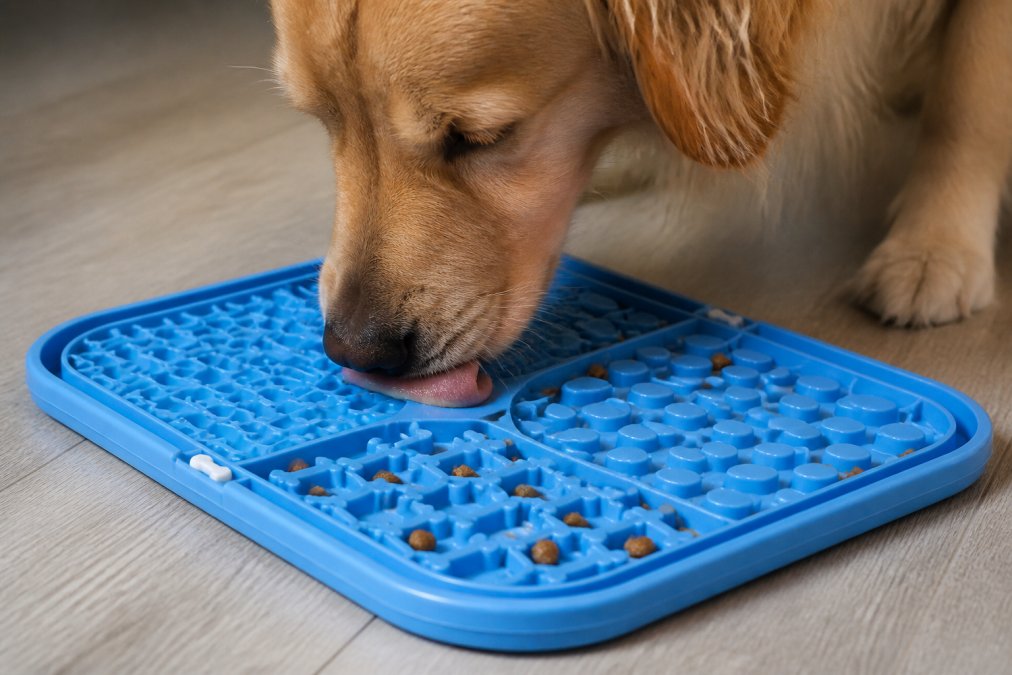
The psychological benefit is equally important. Fast eaters often experience mealtime anxiety, and the act of working for their food can actually reduce stress. Instead of competing with phantom rivals or experiencing the panic of scarcity, dogs settle into a calmer, more focused eating rhythm. This behavioral shift carries benefits beyond digestion.
Benefits of Slow Feeder Bowls for Dogs
Slow feeder bowls deliver measurable improvements across multiple dimensions of canine health and behavior. Pet owners who switch from standard bowls often report changes within the first week, though the most significant health benefits develop over several weeks of consistent use.
Preventing Bloat and Gastric Distress
Bloat, medically known as gastric dilatation-volvolvulus, is one of the most dangerous acute conditions in dogs (vcahospitals.com). It occurs when the stomach fills rapidly with food and gas, then sometimes twists on itself. In severe cases, bloat can be fatal within hours. Slow feeder bowls address one of the primary risk factors: rapid food consumption combined with air ingestion.
When dogs gulp food quickly, they swallow large amounts of air alongside their meal (peer-reviewed research). This aerophagia contributes to gastric distension and increases the mechanical pressure inside the stomach. By extending eating time from 30 seconds to 10 minutes, slow feeders reduce the total volume of air a dog ingests during a single meal. The digestive system has time to process food gradually, and gas can be expelled naturally rather than accumulating in a distended stomach.
Dogs that previously showed signs of indigestion, regurgitation, or gastric distress often improve noticeably within days of switching to a slow feeder bowl. Owners report less vomiting, fewer episodes of undigested kibble reappearing, and dogs that seem more comfortable after eating. While slow feeders are not a guaranteed prevention for bloat, they're a practical, evidence-based way to reduce one of the key contributing factors.
Reducing Gulping and Air Ingestion
Gulping is the most visible symptom of a fast eater, and it's directly tied to aerophagia. A dog that gulps is swallowing food and air as a single mass, which creates immediate pressure in the stomach and intestines. This can trigger burping, gas, and discomfort.
Slow feeder bowls force a different eating pattern. Instead of opening their mouth wide and swallowing, dogs must use their tongue and lips to extract food from the maze. This physical constraint makes gulping mechanically impossible. The dog's eating speed naturally slows because the bowl itself won't allow any other approach.
Many owners notice their dogs stop burping excessively within the first few feedings. The reduction in aerophagia means less gas production overall, which translates to fewer digestive complaints and a more comfortable dog.
Weight Management Through Portion Control
Slow feeders create a psychological effect that supports weight management. Because eating takes longer, dogs feel fuller sooner. The extended eating time allows satiety signals to reach the brain before the dog has consumed excess calories. A dog that would normally finish a meal in 30 seconds and immediately look for more food may feel genuinely satisfied after 10 minutes with the same portion size.
This is particularly valuable for dogs prone to obesity or those on calorie-restricted diets. The bowl itself enforces portion control by making it physically difficult to consume food faster than the design allows. Owners can maintain consistent portion sizes without worrying that their dog will consume everything in a frantic rush.
Mental Stimulation for Dogs at Mealtime
Mealtime doesn't have to be a passive event. Slow feeder bowls transform feeding into a form of enrichment and cognitive engagement. Dogs that work for their food experience the psychological satisfaction of problem-solving, which can reduce boredom-related behavioral issues.
This enrichment aspect becomes especially important for dogs with high energy levels or those spending extended periods indoors. A puzzle-style slow feeder or a sniffing mat engages the dog's natural foraging instincts. Instead of mindlessly consuming food, the dog must think about how to extract each piece. This mental stimulation can tire a dog as effectively as a short walk, making slow feeders valuable for senior dogs, dogs with mobility issues, or those in apartments where outdoor exercise is limited.
Slow feeders can contribute to calmer behavior throughout the day. The cognitive engagement during meals seems to carry over into their overall temperament. Dogs that previously exhibited food-motivated anxiety or destructive behavior often settle into a more relaxed routine when mealtimes become a form of enrichment rather than a race.
How to Slow Down Fast Eating Dogs
Transitioning a fast eater to a slower feeding routine requires patience and a structured approach. The goal is to make the change gradually so the dog doesn't experience frustration or reject the new bowl entirely.
Transitioning Your Dog to a Slow Feeder
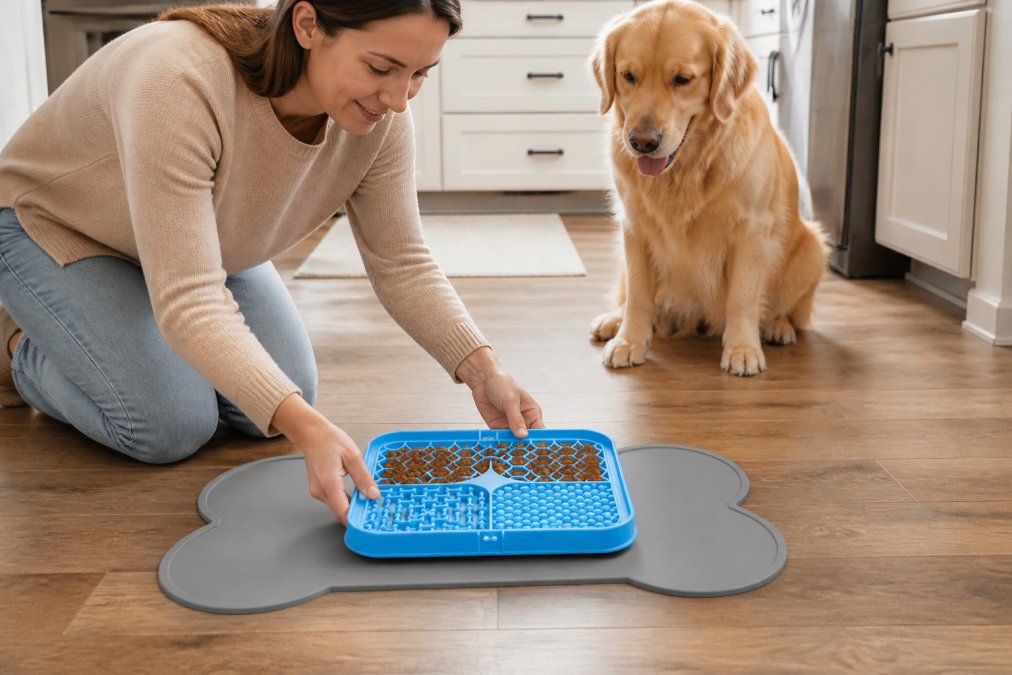
Start by introducing the slow feeder bowl without food. Let your dog investigate it, sniff it, and become familiar with the design. This can take one or two days. Some dogs will naturally paw at it or lick it out of curiosity. This exploration phase reduces the novelty factor and prevents the bowl from feeling like a sudden, unwelcome change.
On day three or four, place a small amount of wet food or a food-based paste into the slow feeder. Wet food is easier for dogs to extract from the ridges initially, and it's less frustrating than kibble during the early transition. Let your dog work with this for a few minutes, then remove the bowl. Repeat this once daily for 2-3 days.
Once your dog is comfortable with the slow feeder and wet food, begin mixing in small amounts of their regular kibble. Start with a 75% wet food, 25% kibble ratio, then gradually shift toward their normal dry food over 7-10 days. This gradual transition prevents the dog from becoming discouraged or refusing meals entirely.
By the end of two weeks, most dogs adapt fully to eating from a slow feeder bowl with their regular kibble. The key is patience during the transition. If your dog seems frustrated, slow down the process. A few extra days of gradual introduction is far better than forcing the change and creating negative associations with mealtime.
Breed-Specific Considerations
Not all dogs benefit equally from every slow feeder design. Breed characteristics, snout length, and jaw structure matter.
Brachycephalic breeds like Bulldogs, Pugs, and Shih Tzus have shortened snouts and can struggle with deep maze-style bowls. For these breeds, a slow feeder with shallower ridges or a sniffing mat works better than a tall puzzle feeder. The goal is to slow eating without creating frustration due to physical limitations.
Large-breed dogs, particularly those with a genetic predisposition to bloat like Great Danes, German Shepherds, and Weimaraners, benefit most from slow feeders. These breeds face the highest risk for gastric dilatation-volvolvulus, making the bloat-prevention aspect of slow feeders especially valuable.
Small dogs and toy breeds can use standard slow feeder bowls, but portion sizes matter. A slow feeder designed for a 50-pound dog will feel enormous to a 5-pound Chihuahua. Look for size-appropriate options that match your dog's actual bowl capacity.
Senior dogs often have dental issues or reduced jaw strength. A slow feeder with softer ridges or a sniffing mat filled with moistened kibble works better than a rigid puzzle feeder that requires significant jaw pressure.
Material Safety and Choosing the Right Bowl
The material your slow feeder bowl is made from matters more than many pet owners realize. Poor-quality plastics can leach chemicals into food and water, while certain materials are prone to cracking and creating sharp edges that pose choking hazards.
Food-grade stainless steel is the safest option. It doesn't leach chemicals, resists scratching, and lasts indefinitely. Stainless steel bowls can be washed in a dishwasher without degradation. They're heavier than plastic, which means they don't slide around during feeding, and they don't retain odors or stains.
Ceramic and melamine bowls are acceptable if they're specifically labeled as food-safe and non-toxic. However, ceramic can chip or crack, creating sharp edges. Once a ceramic bowl shows any damage, it should be replaced immediately.
Avoid cheap plastics, particularly those not labeled as food-grade. Some plastics contain BPA or other compounds that leach into food when exposed to heat or repeated washing. Even food-grade plastics can degrade over time, especially if exposed to hot water or sunlight.
A non-slip base is essential. Slow feeders should have a rubber or silicone bottom that grips the floor. Without this, dogs will push the bowl across the kitchen while eating, which defeats the purpose and creates mess.
Look for slow feeder bowls that are dishwasher safe. Regular hand-washing works, but a dishwasher-safe bowl is more convenient and ensures thorough cleaning. Food residue can accumulate in the ridges, so easy cleaning is important for hygiene.
DIY Alternatives vs. Commercial Slow Feeder
Some pet owners attempt to create DIY slow feeders using household items like tennis balls, rocks, or marbles placed in a regular bowl. While creative, these approaches have significant drawbacks.
DIY methods using small objects create legitimate choking hazards. If a dog accidentally swallows a marble or a piece of a tennis ball while eating, the consequences can be severe. Commercial slow feeders are designed as single integrated pieces without detachable parts that could be ingested.
A muffin tin or ice cube tray can slow eating by forcing dogs to reach into individual compartments, and these are safer than loose objects. However, they're not designed for repeated use as feeding bowls. They can be difficult to clean thoroughly, and they don't have non-slip bases, so they slide around during feeding.
The most practical DIY option is a sniffing mat, which you can create by rolling treats and kibble into a towel or fleece blanket. This works well for enrichment and does slow eating, but it's messier than a bowl and requires more cleanup. It's also better suited as an occasional enrichment activity rather than a daily feeding method.
Commercial slow feeder bowls, like the Proud Pet Shop Slow-Feeding System, are purpose-built for this specific function. They're tested for safety, designed with non-slip bases, and made from food-grade materials. For most households, a commercial slow feeder is worth the investment. The Proud Pet Shop Slow-Feeding System is priced at $15.99 for a 3-piece set, making it an affordable option for households with multiple dogs or those wanting backup bowls.

For dogs that benefit from additional enrichment beyond just slowing eating, the Proud Pet Shop Sniffing Petal Mat at $29.99 provides mental stimulation through a foraging experience. This mat can be used for training, enrichment, or as an alternative feeding method that naturally slows consumption.

For dogs that need significant cognitive engagement, the Proud Pet Shop IQ Treat Puzzle at $34.99 offers adjustable difficulty levels. This allows you to match the challenge to your dog's problem-solving ability and gradually increase difficulty as they learn the puzzle.

Slow feeder bowls work because they address the root causes of rapid eating: physical speed, air ingestion, and lack of cognitive engagement. Whether your dog struggles with bloat risk, digestive distress, or simply eats too fast, a slow feeder bowl provides a practical, evidence-based solution. The transition period requires patience, but most dogs adapt within two weeks. Choosing a food-grade, non-slip bowl with a design appropriate for your dog's breed and size ensures safety and effectiveness. According to veterinary nutrition guidelines, feeding practices that slow consumption and reduce aerophagia are among the most effective non-surgical interventions for managing digestive health in fast-eating dogs. Start with a quality commercial slow feeder from Proudpetshop, introduce it gradually, and monitor your dog's eating behavior and digestive comfort over the first month. Most owners report noticeable improvements in both mealtime behavior and overall digestive health within that timeframe.
Frequently Asked Questions
Q: Do slow feeder bowls actually help prevent bloat in dogs?
A: Yes. Slow feeder bowls reduce the speed at which dogs consume food, which lowers air ingestion (aerophagia) and decreases the risk of gastric distress. By forcing dogs to navigate ridges and obstacles, these bowls extend eating time and allow the digestive system to process food more efficiently, reducing the conditions that can lead to bloat and other digestive issues.
Q: How do slow feeder bowls provide mental stimulation for dogs?
A: Slow feeder bowls turn mealtime into a puzzle-solving activity. Dogs must work to extract food from the maze-like design, engaging their problem-solving abilities and providing cognitive engagement. This enrichment reduces mealtime anxiety and boredom, particularly for food-motivated dogs that finish regular meals in seconds.
Q: Are slow feeder bowls safe for all dog breeds?
A: Most dogs benefit from slow feeders, but brachycephalic breeds with shortened snouts (like Bulldogs and Pugs) need bowls with larger, more accessible ridges to prevent choking hazards and feeding frustration. Always verify that the bowl's design matches your dog's snout length and jaw structure before purchasing.
Q: What's the best way to introduce a slow feeder bowl to my dog?
A: Start by placing the slow feeder alongside your dog's regular bowl for one or two meals so they become familiar with it. Then gradually transition to using only the slow feeder over 3-5 days. Place it on a non-slip base to prevent sliding, and monitor your dog's eating behavior during the first week to ensure they're not frustrated or struggling with the design.
This article was written using GrandRanker