
Table of Contents
- Why Non-Slip Dog Bowls Matter for Your Pet
- Material Types and Their Stability Performance
- How to Slow Down Fast Eating Dogs with the Right Bowl
- Dog Bowl Mats for Messy Eaters and Floor Protection
- Choosing the Right Size and Capacity
- Durability, Cleaning, and Long-Term Value
- Conclusion
Last Updated: August 26, 2026
Why Non-Slip Dog Bowls Matter for Your Pet
A non-slip dog food bowl is a feeding dish with a textured or rubberized base that prevents sliding across floors during meals. When a dog's bowl slides during eating, it creates stress and anxiety, potentially causing injury or negative associations with feeding time. For seniors, puppies, or dogs with mobility issues, an unstable bowl adds unnecessary physical strain.
A stable bowl keeps your dog focused on eating rather than chasing their dish, supports proper posture during meals, and protects your floors from constant sliding and scratching. Non-slip bowls also address feeding behavior, dogs that eat too quickly often suffer from digestive issues and bloating. A bowl that stays put allows you to pair it with slow-feeder designs or elevated feeding stations, creating a complete feeding solution that supports your dog's health and your home's condition.
Material Types and Their Stability Performance
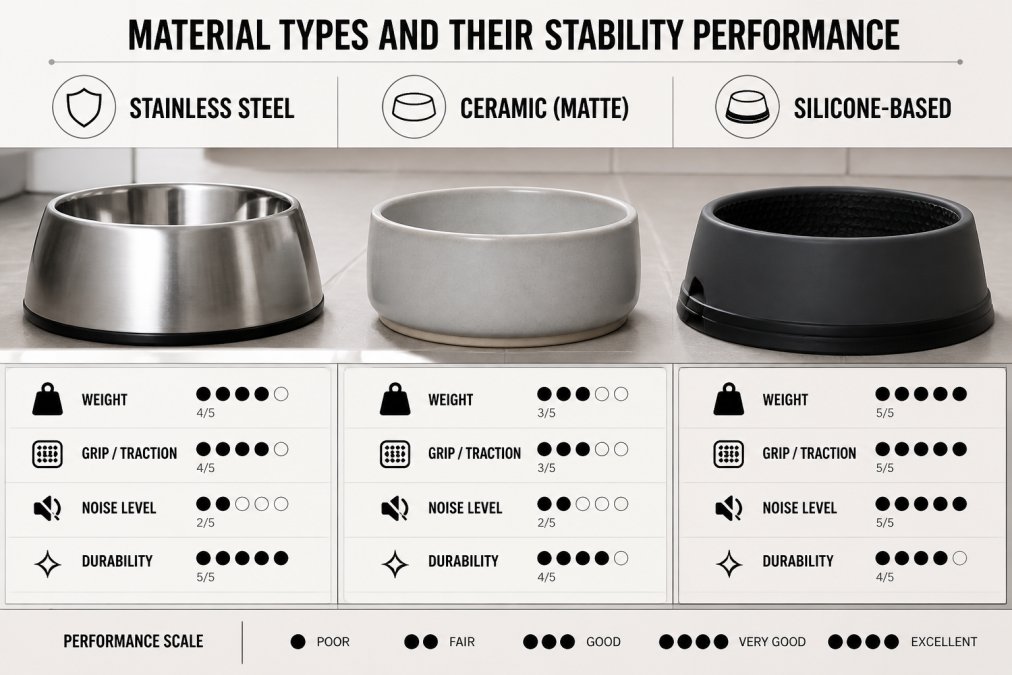
The material of your dog's bowl determines both its stability and longevity. Different materials offer different advantages depending on your dog's size, eating habits, and your floor type.
Stainless Steel Bowls
Stainless steel remains popular because it combines durability with food-grade safety. A quality stainless steel bowl resists corrosion, doesn't retain odors or stains, and lasts for years of daily use. Most stainless steel bowls are dishwasher-safe, which matters when managing multiple pets or a busy household.
For stability, stainless steel bowls paired with a rubberized base deliver strong performance. The weight combined with a non-slip base keeps the bowl firmly in place, even when larger dogs push against it. Stainless steel also conducts temperature well, so water stays cool longer in summer months.
The main limitation is that bare stainless steel will slide on most hard floors. The best non-slip dog food bowls in stainless steel include a silicone or rubber ring bonded to the base. When shopping, verify that the base is actually attached to the bowl, not just a loose insert that can slip off during washing.
Ceramic and Non-Toxic Options
Ceramic bowls offer aesthetic appeal and premium feel. High-quality ceramic is food-grade, non-toxic, and free from harmful chemicals like BPA and phthalates (the FDA). The material doesn't retain flavors or odors and naturally resists bacterial growth.
Ceramic bowls are heavier than stainless steel, which helps with stability. However, ceramic alone can still slide on tile or hardwood without a non-slip base. A well-made ceramic bowl won't chip easily and won't scratch your floors the way metal can.
The downside is that ceramic is breakable. If your dog is aggressive with their bowl or if you have multiple pets with rougher play, ceramic may not survive long-term. Additionally, ceramic bowls are typically hand-wash only, adding friction to your cleaning routine.
For non-slip ceramic bowls, look for models with a rubber or silicone base that extends slightly beyond the bowl's edge, preventing direct contact with your floor.
Silicone Bases and Rubberized Bottoms
Silicone and rubber bases are the core technology that makes non-slip bowls actually non-slip. These materials create friction between the bowl and your floor, preventing sliding. Silicone is particularly effective because it's flexible, durable, and maintains grip even when wet.
Many modern non-slip dog food bowls feature a silicone base covering the entire bottom surface or forming a ring around the perimeter. Full-coverage silicone bases provide superior stability, especially for enthusiastic eaters or larger dogs. The material is also easy to clean and doesn't harbor bacteria.
Rubberized bottoms work similarly but may be slightly less flexible than silicone. Rubber bases are often more affordable and provide adequate stability for most dogs, though rubber can degrade over time with exposure to sunlight or certain cleaning chemicals.
When evaluating silicone or rubber bases, check the thickness and coverage. A thin rubber ring provides minimal stability, while a thick base covering most of the bowl's bottom keeps it firmly in place. The best non-slip dog food bowls use bonded silicone that won't separate from the bowl after repeated washing.
How to Slow Down Fast Eating Dogs with the Right Bowl
Fast eating is one of the most common feeding problems pet owners face. A dog that gulps food without chewing can experience bloating, vomiting, digestive upset, and in severe cases, gastric dilatation-volvulus (GDV), a life-threatening condition (vcahospitals.com).
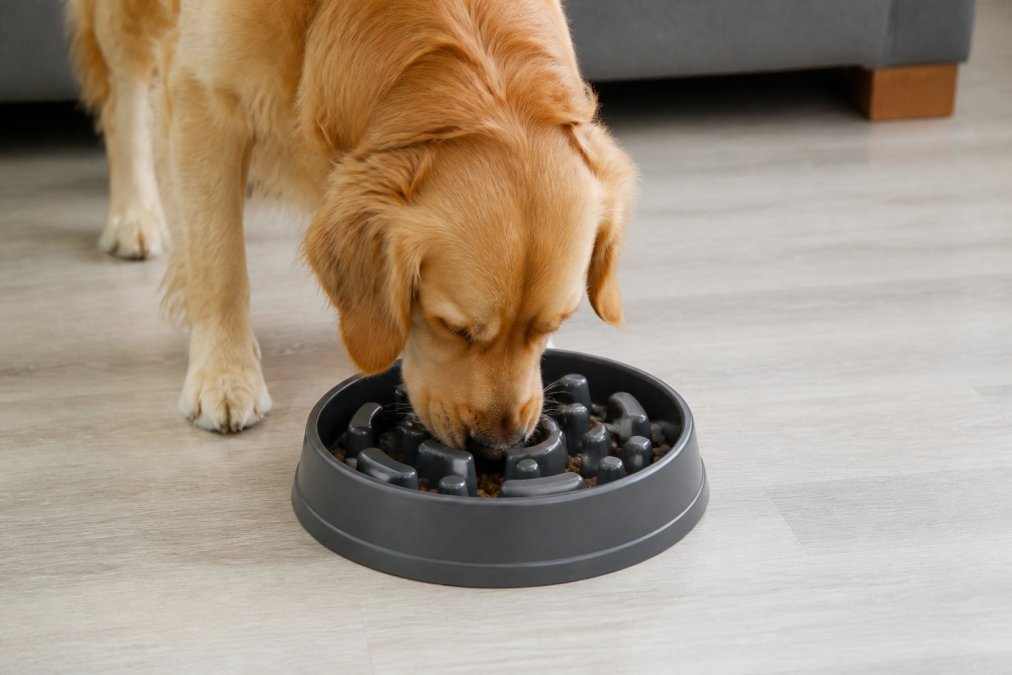
The right bowl design forces your dog to work for each mouthful, naturally slowing their eating pace. Slow-feeder bowls feature raised ridges, maze-like patterns, or compartmented sections that break up the food and require your dog to navigate around obstacles. This mimics natural foraging behavior and transforms eating into a more deliberate process.
Pairing a slow-feeder design with a non-slip base solves two problems simultaneously. The ridged interior slows eating, while the stable base keeps the bowl from sliding as your dog pushes against it. The effectiveness of slow-feeder bowls depends on the depth and complexity of the ridges. The best designs balance challenge with accessibility, slowing eating by 30-50% compared to flat-bottomed bowls (peer-reviewed research).
Feeding frequency also matters. Dogs fed once or twice daily in large portions are more likely to eat quickly than dogs fed multiple smaller meals. Consider combining a slow-feeder bowl with more frequent feeding sessions for comprehensive control over eating pace.
Dog Bowl Mats for Messy Eaters and Floor Protection
Beyond the bowl itself, a dog bowl mat provides an additional layer of floor protection and stability. Bowl mats are absorbent surfaces (typically made from rubber, silicone, or fabric) that sit beneath the bowl to catch spills and prevent water from spreading across your kitchen.
For messy eaters, dogs that splash water, drop kibble, or push food around, a mat becomes essential. The mat contains the mess to a defined area, making cleanup faster and protecting your floors from water damage, staining, or bacterial growth. Many pet owners find that a mat extends the life of their flooring by years.
The best dog bowl mats for use with non-slip dog food bowls are those with raised edges or lip designs that prevent water from flowing onto surrounding floors. Silicone mats are particularly effective because they're waterproof, easy to clean, and won't absorb odors. Fabric mats offer more cushioning and reduce noise when your dog eats from metal bowls.
Mat thickness matters for stability. A mat at least 0.5 inches thick provides sufficient cushioning while maintaining a flat, stable surface. For heavy dogs or aggressive eaters, thicker mats (0.75-1 inch) offer better support and noise reduction. Pairing a quality mat with your non-slip dog food bowl creates a complete feeding station that addresses both bowl movement and floor protection.
Choosing the Right Size and Capacity
Bowl size directly affects eating behavior and stability. A bowl that's too small forces multiple eating sessions, while a bowl that's too large can encourage faster eating and poor posture. The best non-slip dog food bowls match your dog's size and eating pace.
For small dogs (under 15 pounds), a 1-2 cup capacity is typically appropriate. Medium dogs (15-50 pounds) usually require 2-4 cup bowls, while large dogs (over 50 pounds) need 4-8 cup capacity. Giant breeds may require bowls holding 8+ cups.
Filling a bowl to about 75% capacity provides optimal stability and encourages more controlled eating. If your dog eats a large daily portion, consider feeding in two sessions with appropriately-sized bowls rather than using one oversized bowl.
The depth of the bowl also matters. Shallow bowls (1-2 inches deep) work well for flat-faced breeds like bulldogs or pugs. Deeper bowls (3-4 inches) are better for long-nosed breeds and encourage slower eating. Slow-feeder bowls often have greater depth to accommodate the ridged interior design.
Measure your dog's chest height when standing naturally. The bowl should sit at approximately elbow height, allowing your dog to eat with a neutral spine position. If your dog is older or has joint issues, consider an elevated feeding station that raises the bowl 4-6 inches off the ground, reducing strain on the neck, shoulders, and hips.
Durability, Cleaning, and Long-Term Value
The durability of a non-slip dog food bowl determines its true cost over time. A cheap bowl needing replacement every 6-12 months actually costs more than a quality bowl lasting 3-5 years.
Stainless steel bowls are among the most durable options, resisting corrosion, dents, and discoloration. High-quality stainless steel (typically 18/8 or 18/10 grade) maintains its appearance and function for years. Ceramic bowls are durable if they don't break, but breakage is always a risk. Silicone-based bowls are extremely durable and resistant to degradation.
The non-slip base is where durability often fails. Glued or loosely attached bases can separate after repeated washing. Bonded or molded bases permanently attached to the bowl are far more durable. Check reviews and product descriptions to confirm the base won't separate.
Most quality non-slip dog food bowls are dishwasher-safe, though hand-washing with warm soapy water is gentler and extends the bowl's life. Avoid abrasive scrubbers that can damage the silicone base or scratch stainless steel surfaces.
Inspect your bowl regularly for signs of wear. A silicone base becoming slippery, stainless steel with visible rust, or ceramic with chips or cracks are all signals that replacement is needed.
| Material | Typical Lifespan | Dishwasher Safe | Maintenance Level | Best For |
|---|---|---|---|---|
| Stainless Steel + Silicone Base | 3-5 years | Yes | Low | Most dogs; all feeding styles |
| Ceramic + Rubber Base | 2-4 years | Hand-wash recommended | Medium | Dogs without aggressive eating habits |
| Silicone-Based | 2-3 years | Yes | Low | Messy eaters; noise-sensitive households |
| Plastic with Non-Slip Base | 1-2 years | Yes | Low | Budget-conscious; temporary solutions |
Choosing the right non-slip dog food bowl is one of the simplest upgrades you can make to improve your dog's mealtime experience and protect your home. A stable bowl reduces floor damage, supports better eating habits, and creates a foundation for addressing faster eating or digestive issues. Look for bonded silicone bases, food-grade materials, and appropriate sizing for your dog's breed and eating habits. With the right bowl in place, mealtime becomes less stressful for both you and your dog, and your floors stay protected for years to come.
=== FAQ ANSWERS (audit these too, same rules) ===
[1] Q: What makes a non-slip dog food bowl different from a regular bowl? A: Non-slip dog food bowls feature rubberized or silicone bases that grip your floor, preventing sliding and spills during feeding. The anti-skid bottom creates friction against most flooring types, keeping the bowl stable even for enthusiastic or aggressive eaters. Regular bowls lack this grip and move easily, creating mess and frustration for both pet and owner.
[2] Q: How do non-slip bowls help slow down fast eating dogs? A: Many non-slip bowls come with slow-feeder designs featuring ridges, dividers, or maze-like patterns inside the bowl. These designs force dogs to eat around obstacles rather than gulping kibble in seconds, promoting healthier digestion and reducing bloating. The weighted, stable construction also encourages dogs to focus on eating rather than pushing the bowl around.
[3] Q: Are stainless steel or ceramic non-slip bowls better for messy eaters? A: Stainless steel non-slip bowls are more durable and hygienic for heavy use, resisting scratches and corrosion while being dishwasher-safe. Ceramic bowls offer excellent stability and aesthetic appeal but are prone to chipping if your dog is aggressive. For messy eaters, pair either material with a non-slip bowl mat for extra floor protection and easier cleanup.
[4] Q: How do I know if a non-slip bowl will work on my flooring? A: Non-slip bowls work best on tile, linoleum, and hardwood floors where the rubberized base creates strong grip. On carpeted areas, the friction is reduced, so a bowl mat underneath provides additional stability. Test the bowl's weight-to-stability ratio on your specific floor type, and consider a mat if your dog tends to slide the bowl even with the non-slip base.
Frequently Asked Questions
What makes a non-slip dog food bowl different from a regular bowl?
Non-slip dog food bowls feature rubberized or silicone bases that grip your floor, preventing sliding and spills during feeding. The anti-skid bottom creates friction against most flooring types, keeping the bowl stable even for enthusiastic or aggressive eaters. Regular bowls lack this grip and move easily, creating mess and frustration for both pet and owner.
How do non-slip bowls help slow down fast eating dogs?
Many non-slip bowls come with slow-feeder designs featuring ridges, dividers, or maze-like patterns inside the bowl. These designs force dogs to eat around obstacles rather than gulping kibble in seconds, promoting healthier digestion and reducing bloating. The weighted, stable construction also encourages dogs to focus on eating rather than pushing the bowl around.
Are stainless steel or ceramic non-slip bowls better for messy eaters?
Stainless steel non-slip bowls are more durable and hygienic for heavy use, resisting scratches and corrosion while being dishwasher-safe. Ceramic bowls offer excellent stability and aesthetic appeal but are prone to chipping if your dog is aggressive. For messy eaters, pair either material with a non-slip bowl mat for extra floor protection and easier cleanup.
How do I know if a non-slip bowl will work on my flooring?
Non-slip bowls work best on tile, linoleum, and hardwood floors where the rubberized base creates strong grip. On carpeted areas, the friction is reduced, so a bowl mat underneath provides additional stability. Test the bowl's weight-to-stability ratio on your specific floor type, and consider a mat if your dog tends to slide the bowl even with the non-slip base.
This article was written using GrandRanker