
Table of Contents
- What Makes a Cute Pet Carrier Safe and Practical?
- How to Choose a Pet Carrier Size for Your Pet
- Airline Approved Pet Carriers: What You Need to Know
- Best Practices for Pet Travel Safety
- Top Cute Pet Carriers for Small Dogs and Cats
- Ergonomic Health for Owners: Avoiding Back Pain
- Training Anxious Pets to Love Their Carrier
- Frequently Asked Questions
Last Updated: September 14, 2026
What Makes a Cute Pet Carrier Safe and Practical?
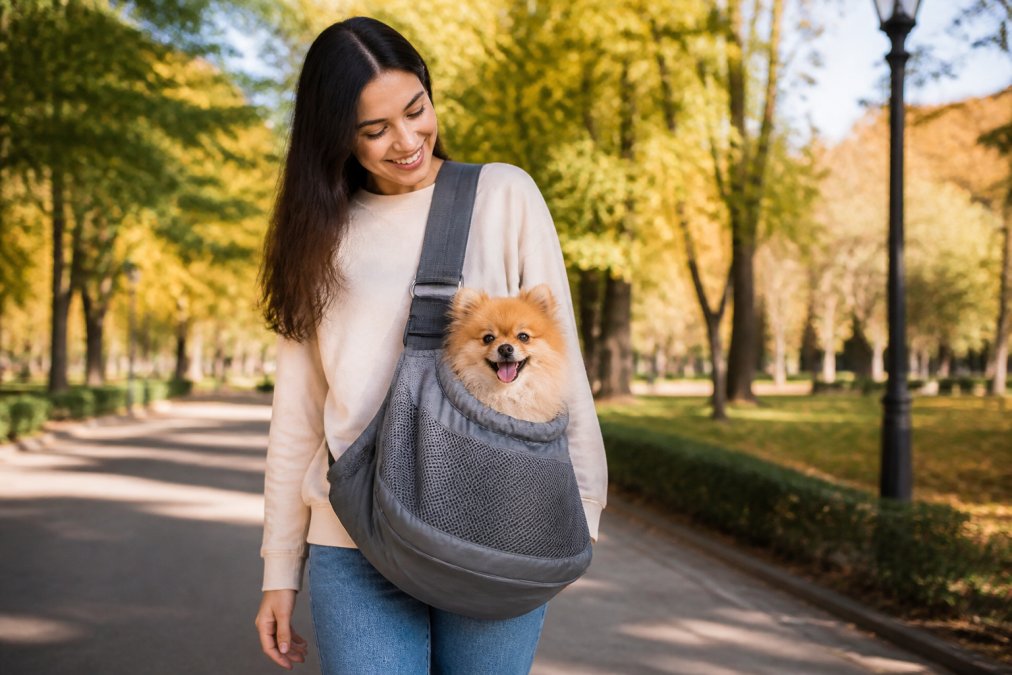
A safe cute pet carrier balances style with structure: reinforced stitching, secure zippers, breathable mesh panels, and a weight capacity matched to your pet. Without those basics, even the most attractive carrier becomes a risk.
The American Veterinary Medical Association notes that pets should be secured during travel, and a carrier that fails mid-trip is worse than none. Cuteness and safety are not opposites: the carriers that hold up best combine durable construction with water-resistant fabric, removable padding, and escape-proof zipper locks.
Three features separate a practical carrier from a decorative one:
- Mesh ventilation on at least two sides so air moves even when the bag is zipped
- A safety leash or tether inside, clipped to a harness rather than a collar
- Shock-absorbent base padding that keeps your pet level when you set the bag down
How to Choose a Pet Carrier Size for Your Pet
Choosing a pet carrier size comes down to three measurements: your pet's length from chest to tail base, height while standing, and weight. Add roughly two inches of clearance in every direction so your pet can stand, turn around, and lie down flat.
Too large a carrier defeats the purpose: your pet slides around, increasing stress and reducing shock absorption. Too small, and they cannot shift position on a long trip.
| Pet Weight | Typical Carrier Type | Key Measurement to Check |
|---|---|---|
| Under 8 lbs | Sling or purse style | Body length plus 2 inches |
| 8-15 lbs | Crossbody sling, tote | Shoulder strap width and pad |
| 15-25 lbs | Backpack carrier | Back panel height and hip support |
| 25+ lbs | Structured backpack or hard case | Weight capacity rating, not pet weight |
Weigh your pet, then measure with a tape measure in hand, most returns happen because the owner guessed. A common mistake is buying for the pet's current size without accounting for a growing puppy or a senior pet who needs room to lie flat.
Airline Approved Pet Carriers: What You Need to Know
"Airline approved" is not a certification, it is a marketing phrase. No federal agency certifies pet carriers for cabin use; the only rule that matters is your airline's contract of carriage for the aircraft you booked. A bag that clears the gate on a regional jet may be rejected on a wide-body, and vice versa.
The three numbers you actually need
Before you buy anything, pull three figures from your airline's website:
- Maximum under-seat dimensions for your cabin class on your aircraft type (typically expressed as length x width x height in inches)
- Maximum pet-plus-carrier weight for in-cabin travel (commonly capped in the low 20 lb range, but it varies)
- Carrier height when soft-sided and compressed, soft-sided bags are usually allowed to squish slightly, hard-sided ones are not
Most domestic carriers publish under-seat limits of 17-19 inches long, 10-11 inches wide, and 9-11 inches high for main cabin economy. Regional aircraft and bulkhead seats often have less clearance, so confirm against the seat map for the exact aircraft, not the airline's general pet page.
What each major carrier requires
Rules change, so verify before every trip, but the recurring patterns are:
- Soft-sided carriers only for in-cabin travel on most domestic airlines. Hard-sided carriers are typically cargo-only.
- The pet must remain inside the carrier for the entire flight, including taxi and turbulence. You cannot hold your pet on your lap.
- One pet per carrier, and generally one carrier per passenger.
- The carrier counts as your carry-on on most fares, which means you forfeit your rollaboard.
- Advance reservation required. Most airlines cap in-cabin pets per flight (often 2-4), and the spots sell out on popular routes.
- Health certificate and vaccination records may be requested at check-in, especially for international itineraries.
TSA screening: the top-loading advantage
The TSA guidance on traveling with pets confirms that pets must be removed from the carrier and the carrier must go through the X-ray. You will carry your pet through the metal detector or hold them for a pat-down. This is the single most stressful 60 seconds of the trip for most animals.
A top-loading carrier, with a zippered top panel in addition to the front, lets you lift your pet out vertically without unzipping the entire front and risking an escape. If you fly more than once a year, prioritize top-load over front-load.
A compliance checklist you can run in five minutes
Copy this into your phone notes before every flight:
- Airline name and flight number confirmed
- Aircraft type confirmed (check the seat map)
- Under-seat dimensions pulled from the airline's own site
- Carrier measured at its widest point, including any exterior pockets
- Pet weighed with carrier on a luggage scale
- In-cabin pet reservation confirmed by email
- Health certificate and vaccine records printed
- Top-load opening tested at home with the pet inside
- Absorbent liner and spare packed in personal item
- Airline's pet phone line saved in contacts for day-of questions
For the full regulatory picture on interstate and international movement, check the USDA Animal and Plant Health Inspection Service pet travel requirements, which covers health certificates, quarantine rules, and species-specific restrictions that no airline page will tell you about.
Best Practices for Pet Travel Safety
Pet travel safety has three phases, pre-trip, in-transit, and arrival, and most guides only cover the first. The in-transit phase is where injuries happen, and it is almost entirely about restraint and temperature.
Pre-trip: the 24-hour window
Feed a light meal three to four hours before departure, not right before, a full stomach plus motion equals vomiting. Give a short, low-intensity walk to burn nervous energy; a hard run right before a car ride raises body temperature and heart rate.
Skip sedatives unless your veterinarian prescribes them. Over-the-counter calming chews are not regulated for efficacy, and sedated pets cannot regulate body temperature or right themselves if the carrier tips. Trial any calming product at home a week before travel.
In-transit: restraint is the whole game
An unrestrained pet in a moving vehicle is a projectile. At 30 mph, a 10 lb pet in a sudden stop generates roughly 300 lb of force, more than most people can hold onto. Lap-carrying is the single most dangerous thing you can do in a car.
Three restraint options, ranked by protection:
- Crash-tested carrier secured with a seatbelt, thread the seatbelt through the carrier's built-in loop or behind the backrest. This is the gold standard. Look for carriers that state they have been tested to a recognized crash-test standard; most are not.
- Car seat with a carrier tether, a dedicated pet car seat with a short tether clipped to a harness (never a collar) limits movement without strangling the pet.
- Carrier on the floor behind the front seat, better than a lap, worse than a seatbelt. Only acceptable for very short trips.
Never place a carrier on the passenger seat unsecured, and never stack anything on top of it. In a rear-end collision, an unsecured carrier becomes a missile aimed at the front seats.
Temperature: the invisible risk
Pets overheat faster than humans because they cannot sweat. Inside a parked car, interior temperature can rise 20 degrees Fahrenheit in 10 minutes and 40 degrees in an hour, even on a mild 70-degree day with the windows cracked (avma.org). Never leave a pet in a parked car, even briefly.
Mesh panels provide ventilation but not cooling: on a 90-degree day, a mesh carrier in direct sun can exceed safe internal temperatures within 15 minutes. Travel early morning or evening in summer, and bring a battery-powered clip fan for midday trips. In winter, line the carrier with a fleece pad and a wind-blocking cover on the window side.
Rest stops and hydration
Plan a stop every two to three hours. Offer water in a collapsible bowl, but skip food until you arrive, a full stomach plus continued motion causes nausea. Bring a washable liner and a spare, and use familiar-smelling bedding, which reduces stress better than any calming spray.
Arrival: decompression matters
Do not immediately introduce your pet to a new environment after a long trip. Set the carrier down in a quiet room, open it, and let the pet exit on their own schedule, forcing them out teaches them the carrier leads to overwhelming situations. Give 15-30 minutes of quiet time before introductions, feeding, or handling.
Top Cute Pet Carriers for Small Dogs and Cats
The best cute pet carriers for small dogs and cats combine hands-free carrying with genuine safety features. Two Proudpetshop options stand out.
The Proud Pet Shop TrailFold Carrier ($34.99) is our top pick for active owners. Wear it front-facing for short trips or switch to back mode for longer treks. Adjustable straps distribute weight across the shoulders, breathable mesh keeps air moving, and the harness-like zipper lock prevents escape. It includes a safety leash, removable pad, and side pockets.

The Proud Pet Shop Sidekick Sling ($28.99) suits cats and small dogs up to 15 lbs. The adjustable crossbody strap fits most body types, and the soft buckle-close design keeps your pet secure against your body with a breathable panel for airflow. It is the better choice for vet visits and quick errands.
| Feature | TrailFold Carrier | Sidekick Sling |
|---|---|---|
| Price | $34.99 | $28.99 |
| Best For | Hiking, long walks | Errands, vet visits |
| Carry Mode | Front or back | Crossbody sling |
| Weight Limit | Small pets | Up to 15 lbs |
| Key Safety Feature | Zipper lock, safety leash | Buckle-close, breathable panel |

Ergonomic Health for Owners: Avoiding Back Pain
Owner ergonomics is the angle most carrier guides skip, and it matters more than the bag's appearance. Carrying 15 lbs on one shoulder for an hour puts uneven load on your spine, leading to shoulder and lower back strain over time.
The fix is load distribution: a backpack spreads weight across both shoulders and the hips, while a sling concentrates it on one side. If you carry a sling regularly, switch shoulders every 15 to 20 minutes and keep the strap pad over the widest part of your shoulder, not your neck.
Look for these ergonomic features when comparing carriers:
- Wide, padded shoulder straps rather than thin nylon webbing
- An adjustable neck and chest strap to stop the bag from swinging
- A structured back panel that holds its shape against your spine
Training Anxious Pets to Love Their Carrier
Training an anxious pet to accept a carrier takes one to two weeks of short, positive sessions. Rushing this step is the biggest reason pets panic in transit, and it undoes every safety feature you paid for.
Leave the carrier open on the floor with a favorite blanket inside for two days and let your pet investigate. Then toss treats near the opening, gradually moving them inside. Once your pet enters willingly, close the flap for five seconds, treat, and open it again. Build to two minutes, then five.
- Days 1-3: Carrier stays open with bedding and treats nearby
- Days 4-7: Treats inside the carrier, door open
- Days 8-10: Short closures with treats, extending duration
- Days 11-14: Practice carrying the closed carrier around the house
A carrier that smells like home and predicts treats becomes a safe space rather than a trap, especially for rescue pets and cats, who are more prone to carrier anxiety than dogs.
Finding a carrier that is both genuinely cute and genuinely safe takes more than browsing photos. Check the zipper security, measure your pet properly, confirm your airline's specific rules, and invest the two weeks it takes to train your pet to accept the bag. Proudpetshop carries the TrailFold Carrier and Sidekick Sling, both built with breathable mesh, escape-proof closures, and ergonomic straps, backed by a 30-day satisfaction guarantee and free shipping on orders over $50. Get started with Proudpetshop and find a carrier your pet actually enjoys riding in.

Frequently Asked Questions
What can I use instead of a pet carrier?
For short, safe trips, a pet sling or backpack carrier can work as an alternative if it has secure closures and ventilation. A well-fitted harness with a seatbelt tether is another option for car travel. However, for airline travel or vet visits, a proper carrier is required for safety and compliance. Always prioritize escape-proof zippers and breathable mesh over convenience.
What are some trendy dog carriers?
Trendy options include sling bags that look like purses, backpack carriers with mesh windows, and tote-style carriers with removable padding. Look for features like water-resistant fabric, adjustable straps, and washable liners. The Proud Pet Shop Sidekick Sling is a popular hands-free choice for pets up to 15 lbs, offering a breathable panel and adjustable strap.
Do cats prefer hard or soft carriers?
Most cats prefer soft-sided carriers because they are lighter, more comfortable, and often have mesh panels for visibility. Soft carriers also collapse for storage, which helps in small apartments. However, hard carriers offer more structure and protection in cars. For airline travel, soft carriers that meet under-seat dimensions are often the best fit.
How do I choose a safe and cute pet carrier?
Start by measuring your pet from nose to tail and checking weight limits. Look for escape-proof zippers, breathable mesh, and a safety leash inside. For airline travel, confirm the carrier meets under-seat size requirements. A carrier like the Proud Pet Shop TrailFold Carrier ($34.99) combines style with adjustable straps and a removable pad for comfort. Always test the carrier at home before travel.