
Table of Contents
- What Is Gastric Dilatation Volvulus (GDV) and Why It Matters
- Signs of Bloat in Dogs: What to Watch For
- How to Feed a Dog to Prevent Bloat: Meals, Timing, and Portions
- The Best Slow Feeder Bowl for Dogs: What Actually Works
- Exercise Timing and Activity: The 60-Minute Rule
- Water Intake, Stress, and Other Risk Factors Owners Miss
- Breed Risk, Genetic Screening, and Prophylactic Gastropexy
- Conclusion: Building a Bloat-Resistant Routine
- Frequently Asked Questions
Last Updated: September 22, 2026
What Is Gastric Dilatation Volvulus (GDV) and Why It Matters
Gastric dilatation volvulus is a life-threatening condition where a dog's stomach fills with gas and twists on itself, cutting off blood flow and trapping gas. It can turn fatal within hours. This guide from Proudpetshop covers how to prevent bloat in dogs naturally using feeding changes, timing rules, and the right gear.
Signs of Bloat in Dogs: What to Watch For
Signs of bloat in dogs range from early restlessness to sudden abdominal swelling. The earliest clues are easy to miss: pacing, drooling, or trying to vomit without producing anything.
Watch for these early warning signs:
- Pacing and inability to settle
- Excessive drooling or hypersalivation
- Repeated swallowing or lip licking
- A tucked, uncomfortable stance
Early Warning Signs vs. Emergency Symptoms
Emergency symptoms demand a vet visit within minutes. The clearest red flag is non-productive retching: your dog heaves like vomiting but nothing comes up.
Other emergency signs include:
- A hard, swollen, drum-like belly (abdominal distension)
- Rapid, shallow breathing
- Pale gums and weak pulse (signs of shock)
- Collapse or extreme lethargy
How to Feed a Dog to Prevent Bloat: Meals, Timing, and Portions
How to feed a dog to prevent bloat comes down to three levers: meal frequency, portion size, and eating speed. Split daily food into two or three smaller meals, a single huge meal stretches the stomach and raises GDV risk.
Follow these feeding rules:
- Feed 2-3 measured meals per day, not one
- Use a measuring cup so portions stay consistent
- Avoid sudden diet changes; transition over 7-10 days
- Keep the bowl on the floor, not elevated
Why Slow Feeding Changes the Equation
Fast eating pulls in air, a process called aerophagia. That trapped air is one of the main drivers of stomach bloat, so slowing mealtime directly reduces how much air your dog takes in.
The Best Slow Feeder Bowl for Dogs: What Actually Works
The best slow feeder bowl for dogs is one that forces your dog to work for each bite. Maze bowls, lick mats, and snuffle mats all slow eating by adding obstacles between your dog and the food.
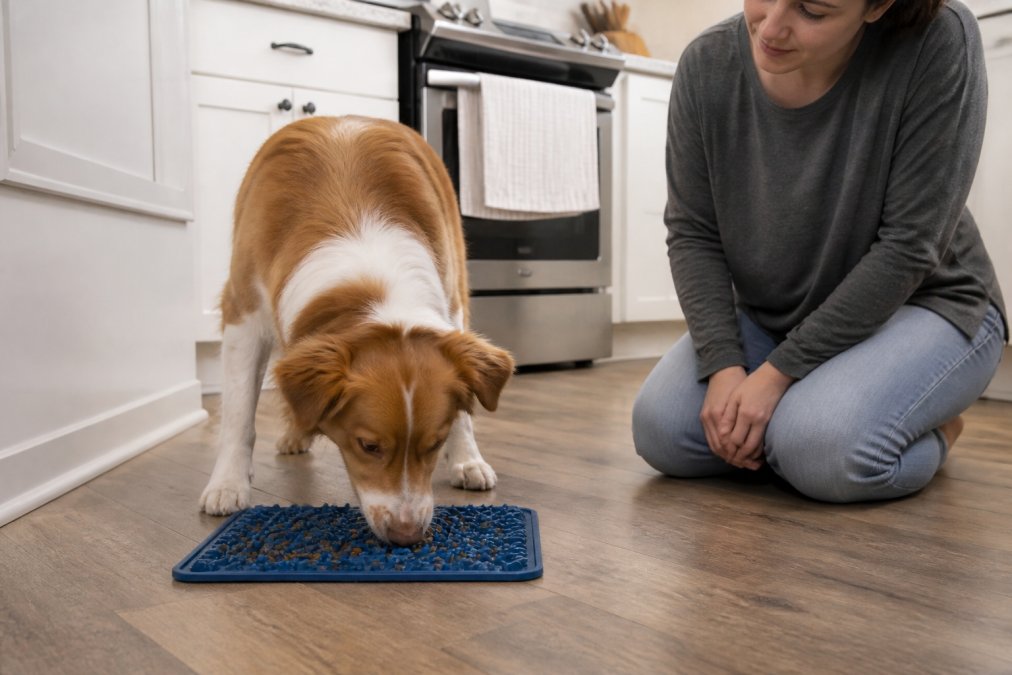
Here's how the main options compare:
| Slow Feeder Type | How It Slows Eating | Best For | Cleaning |
|---|---|---|---|
| Maze bowl | Ridges block fast gulping | Wet or dry food | Dishwasher safe |
| Lick mat | Licking replaces gulping | Wet food, treats | Dishwasher safe |
| Snuffle mat | Nose work hides kibble | Dry food, enrichment | Machine washable |
| Puzzle feeder | Problem-solving slows pace | Dry kibble | Dishwasher safe |
Exercise Timing and Activity: The 60-Minute Rule
The 60-minute rule is simple: keep your dog calm for one hour before and after meals. Strenuous activity around mealtime is one of the most cited triggers for bloat in deep-chested breeds.
Plan your day around this window:
- Walk and play well before dinner
- Feed after your dog has cooled down
- Skip vigorous fetch or running right after eating
- Use quiet enrichment instead, like a puzzle feeder
Water Intake, Stress, and Other Risk Factors Owners Miss
Water and stress are the two risk factors most owners overlook. A dog that empties a bowl in ten seconds after a run swallows air along with the water, the same aerophagia that drives food-related bloat. Chronic anxiety also keeps the gut from moving normally, letting gas accumulate instead of passing.
Why Water Volume and Speed Matter as Much as Food
A dog's stomach holds roughly 0.5 to 1 cup of liquid per 10 pounds of body weight before it feels full, though that varies by breed and size. When a thirsty dog drinks faster than the stomach can empty, the stomach distends and the dog pulls in air with every gulp, the exact combination that precedes dilatation.
Manage water the way you manage food:
Proud Pet Shop Sniffing Petal Mat →
- Offer small amounts often instead of one full bowl, refill a shallow bowl two or three times rather than leaving a deep one out all day
- Limit free water for 30 to 60 minutes before and after hard exercise, then offer small amounts
- Bring a collapsible bowl on hikes and pour in a quarter-cup at a time so your dog drinks in sips, not gulps
- Watch for "water gulpers", dogs that drain a bowl in one long pull, and slow them with a floating toy or a shallow, wide bowl that forces smaller laps
- Skip ice cubes and very cold water right after vigorous play; cold water can trigger rapid, large-volume drinking in some dogs
The Gut-Brain Connection: How Stress Slows Digestion
Stress affects digestion through the gut-brain axis, the two-way signaling network between the central nervous system and the enteric nervous system. When a dog is chronically anxious, cortisol and adrenaline shift blood flow away from the gut and slow gastric motility, the contractions that move food and gas through the stomach. Slower motility means gas sits longer and pressure builds.
Dogs most at risk from this pathway include:
- Dogs with separation anxiety that pace or vocalize for hours
- Noise-phobic dogs that panic during storms or fireworks
- Dogs in chaotic households with unpredictable feeding times or frequent new people and animals
- Dogs that eat fast specifically because they are competing for food with another pet
Practical ways to lower that stress load:
- Feed at the same times every day so the digestive system settles into a rhythm
- Feed anxious dogs in a quiet, separate room away from other pets and foot traffic
- Use a lick mat or snuffle mat as a calming activity, licking and nose work are repetitive, low-arousal behaviors that can lower heart rate
- Keep the hour around meals low-key: no visitors, no vacuuming, no crate-and-go
- Talk to your vet about a behavior plan if anxiety is severe; some dogs need more than routine changes
Bloat risk stacks. A big meal, hard play, a full bowl of water, and a stressful hour in the same window is far riskier than any one of those alone. Space them out and you cut the odds.
Breed Risk, Genetic Screening, and Prophylactic Gastropexy
Breed risk is real and partly inherited. Deep-chested dogs with a close family history of bloat carry higher odds, so genetic screening and a candid conversation with your vet matter more than any single feeding trick.
Which Dogs Carry the Highest Inherited Risk
Deep-chested, narrow-waisted breeds top every veterinary watch list: Great Danes, Standard Poodles, Weimaraners, German Shepherds, Doberman Pinschers, Irish Setters, and Gordon Setters. Great Danes carry the highest lifetime risk of any breed, roughly one in five, which is why many Dane owners treat prevention as a lifelong project.
Risk also rises with:
- A first-degree relative (parent or sibling) that has had GDV
- Increasing age, with risk climbing after age seven
- A nervous, fearful temperament
- Eating one large meal per day
- A body condition that is underweight rather than lean
What Genetic Screening Actually Looks For
Genetic screening for bloat is not a single test that returns a yes-or-no answer. It is a combination of:
- Family history review, the most reliable predictor currently available, since the inheritance pattern is complex and not tied to one gene
- Breed-specific risk panels, some commercial labs offer panels that flag markers associated with gastrointestinal and motility traits, though these are risk indicators, not diagnoses
- Physical assessment, your vet measuring chest depth and width relative to body weight, since conformation is a major structural risk factor
Prophylactic Gastropexy: A Balanced Look
Prophylactic gastropexy is a preventive surgery that permanently tacks the stomach to the right side of the body wall with sutures or a laparoscopic tack. It does not stop the stomach from bloating with gas, it prevents the deadly twist, volvulus, because a tacked stomach cannot rotate 180 to 360 degrees.
What owners should know:
- It is most commonly done at the same time as spaying or neutering, so the dog recovers from one anesthesia event instead of two
- Laparoscopic gastropexy is less invasive than the open version, with smaller incisions and typically a faster return to normal activity
- Most dogs go home the same day or the next day and are back to normal activity within about two weeks, with restricted exercise during healing
- Complications are uncommon but include infection, suture failure, and adhesion formation
- Cost varies widely by region and by whether it is done laparoscopically or open, and it is a one-time expense rather than an ongoing one
If you are already planning to spay or neuter a deep-chested puppy, ask your vet about adding a prophylactic gastropexy to the same procedure. Combining them is the most common way owners in high-risk breeds manage the decision.
Conclusion: Building a Bloat-Resistant Routine
Bloat prevention isn't one trick. It's a routine: smaller meals, slow feeders, calm windows around eating, managed water, and lower stress. Stack those habits and you cut the biggest controllable risks.
Frequently Asked Questions
What is the most common cause of bloat in dogs?
The most common trigger is eating one large meal quickly, which causes the stomach to fill with food, gas, and swallowed air (aerophagia). Deep-chested breeds are especially vulnerable because their anatomy allows the stomach to rotate more easily. Other contributing factors include post-prandial exercise, stress, and drinking large volumes of water right after eating. Reducing meal size and slowing eating speed are the two most effective steps you can take to prevent bloat in dogs naturally.
What are the early warning signs of GDV in dogs?
The earliest signs of bloat in dogs include restlessness, pacing, and a visibly distended abdomen. As the condition progresses, you may see non-productive retching (the dog tries to vomit but nothing comes up), hypersalivation, and lethargy. These symptoms can escalate to shock within hours. If you notice a swollen belly combined with unproductive retching, treat it as a life-threatening emergency and go to a veterinary hospital immediately. Do not wait to see if it resolves on its own.
Are there specific feeding schedules that reduce bloat risk?
Yes. Splitting daily food into two or three smaller meals instead of one large meal reduces stomach volume at any given time. Using a slow feeder bowl for dogs further extends mealtime and reduces how much air your dog swallows. Avoid feeding within one hour before or after strenuous activity. Some owners also use an automatic feeder to enforce consistent meal timing, which helps regulate gastrointestinal motility and prevents the feast-then-fast pattern that can contribute to bloat.
Can bloat in dogs go away on its own?
Simple gas bloat without torsion may resolve, but gastric dilatation volvulus (GDV) is a life-threatening emergency that will not resolve without veterinary intervention. Once the stomach rotates (torsion), blood supply is cut off and the dog can go into shock within hours. There is no safe home remedy for GDV. If you suspect torsion based on abdominal distension and non-productive retching, drive to an emergency vet immediately. Early intervention dramatically improves survival rates.