
Table of Contents
- What to Look for in Puppy Carriers
- How to Measure a Dog for a Carrier
- Puppy Carrier Safety: Airline, Car, and Public Transit
- Choosing an Airline-Approved Dog Carrier
- Age, Development, and Gradual Carrier Training
- Comfort, Durability, and Long-Term Value
- Common Mistakes to Avoid When Buying Puppy Carriers
- Conclusion
- Frequently Asked Questions
Last Updated: October 8, 2026
What to Look for in Puppy Carriers
The right puppy carriers come down to four decisions: style, ventilation, closure security, and fit. Get those wrong and you will be replacing the carrier within months.
A puppy carrier is a portable enclosure designed to hold a small dog safely during travel, errands, or walks.
Puppies grow fast, so a carrier that fits at twelve weeks may not fit at six months. Buy for the size your breed is likely to reach, not today's size, unless you plan to size up.
Carrier Styles: Soft-Sided, Hard-Sided, Backpack, Sling, and Tote
Soft-sided carriers use fabric and mesh, collapse flat, and suit car travel and vet visits. Hard-sided carriers hold their shape, protect better in a crash, and clean easily, but take up closet space.
Backpack carriers keep your hands free and distribute weight across both shoulders. Sling and tote carriers, sometimes called a pet purse, sit against one side of the body and work best for short trips and puppies under 15 lbs. Our Sidekick Sling fits that range, with an adjustable strap and breathable panel.

Ventilation, Visibility, and Secure Closure
Mesh panels on at least two sides keep air moving, and a puppy that can see you stays calmer. Look for a zippered entry plus a second closure, and check for a locking tab. A single zipper on a curious puppy is a risk, not a feature.
How to Measure a Dog for a Carrier
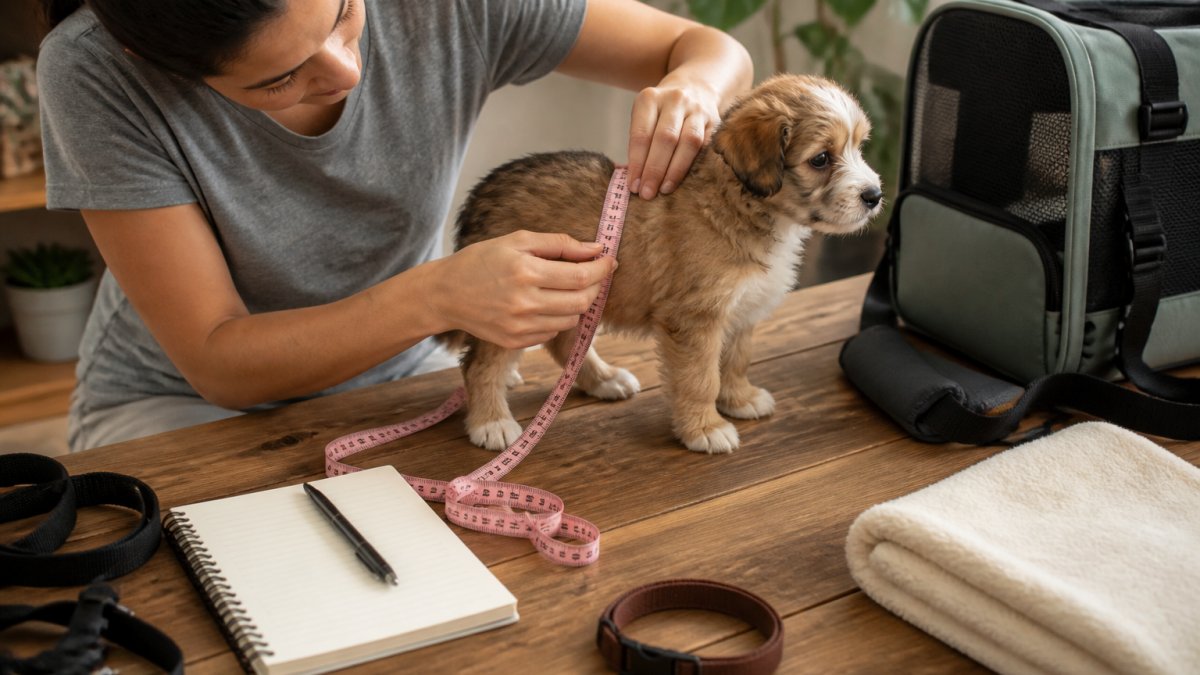
Learning how to measure a dog for a carrier takes about two minutes and prevents most returns.
You need three numbers:
- Length: base of the neck (where the collar sits) to the base of the tail.
- Height: floor to the top of the head, with the head held in a normal standing position, not stretched up or tucked down.
- Width: across the widest part of the chest, usually just behind the front legs.
Add roughly 2 to 3 inches to each measurement. That allowance lets your puppy stand without the head pressing the ceiling, turn around, and lie down with legs extended.
| Measurement | Where to Measure | Add This Much |
|---|---|---|
| Length | Neck base to tail base | 2-3 inches |
| Height | Floor to top of head | 2-3 inches |
| Width | Widest point of chest | 2-3 inches |
Turning Measurements Into a Carrier Size
Compare your padded numbers against the carrier's interior dimensions, not the exterior. Listings usually quote the outside, and a soft-sided carrier can lose 1 to 2 inches of usable space to padding, frame, and a floor pad. If only exterior dimensions are listed, subtract about 2 inches from each.
Then check the weight rating against your puppy's expected adult weight, not today's weight. Breed growth charts and your veterinarian's estimate are the most reliable sources.
The Growth Problem, and How to Handle It
The growth curve is steepest in the first six months, so a puppy that fits a small carrier at twelve weeks often outgrows it by five or six months. Three practical options:
- Buy for adult size now and accept a roomier fit early. Best for soft-sided and hard-sided carriers used mainly in the car or at home.
- Buy for current size and plan to size up once. Best for slings and totes, where a snug fit is part of the design and an oversized carrier defeats the purpose.
- Buy an adjustable or expandable carrier. Some soft-sided models have zip-out panels that add length or height, which stretches the useful life across the growth spurt.
Remeasure every three to four weeks during the first year, and save the numbers in your phone so you can compare against a listing without hunting for a tape measure.
The Two-Minute Fit Check
Once the carrier arrives, put your puppy inside on a flat surface and check four things:
- The puppy can stand fully upright without the head touching the top.
- The puppy can turn around without the body folding or the legs catching.
- The puppy can lie down with the legs extended, not tucked tight.
- There is no more than about 2 inches of empty space beyond the padded measurements, more than that and the puppy slides on turns and stops.
If any fail, size up or down before the return window closes. Fit decides whether a carrier gets used daily or ends up in a closet.
Puppy Carrier Safety: Airline, Car, and Public Transit
Puppy carrier safety rules change depending on how you travel. A carrier that works in a car may be rejected at the gate, and one allowed in the cabin may not protect your puppy in a crash.
Airline Travel Rules and Cabin Requirements
Most airlines require a soft-sided carrier that fits under the seat in front of you, and they set their own weight and dimension limits. Check your specific airline's current pet policy before booking, because those limits change and vary by aircraft. airline pet travel policies covers the federal rules for air travel with pets, but each carrier adds its own cabin requirements.
Car Travel and Securing the Carrier
For car travel, buckle in or secure the carrier so it cannot slide, a loose carrier becomes a projectile in a sudden stop. If your puppy rides in a car seat, pair the carrier with a crash-tested seat attachment rather than relying on the carrier alone.
Choosing an Airline-Approved Dog Carrier
An airline-approved dog carrier meets your specific airline's under-seat dimensions, not a generic "airline approved" label. Measure the space under the seat you booked, then match it to the carrier's exterior dimensions.
Soft-sided designs win here because they compress slightly under a seat. Look for a collapsible frame, mesh on three sides, and a waterproof bottom. Our TrailFold Carrier uses mesh panels on the sides and front, an interior safety leash clip, and a removable washable floor pad, which matters on long travel days.
Proud Pet Shop TrailFold Carrier →

Age, Development, and Gradual Carrier Training
Carrier training should start before your puppy needs to travel, not on the day of the trip. A puppy that knows the carrier as a safe, treat-filled place settles in minutes; one meeting it first at the airport will panic.
Age matters. Puppies under about eight weeks have limited bladder control and tire quickly, so keep sessions short. Puppies in the teething window (roughly three to six months) will chew mesh and zippers if left unsupervised.
A Two-Week Acclimation Plan
This sequence works for most puppies.
Days 3-4, Feed inside. Move one meal into the carrier with the door open.
Days 7-8, Extend the time. Build to two minutes, then five, with you in the room.
Days 9-10, Step out of sight. Leave the room for thirty seconds, then a minute, then two. Return calmly.
Days 11-12, Carry it around the house. Pick up the carrier with the puppy inside and walk a few laps.
Days 13-14, Short car rides. Buckle the carrier in and drive around the block.
What to Do If Your Puppy Panics
A puppy that screams, drools heavily, or tries to claw out of the carrier is stressed, not stubborn. Do not push through. Go back two steps, shorten sessions, and pair the carrier with higher-value food.
Never use the carrier as punishment, and never leave a puppy crated in a carrier for long stretches. A carrier is a travel and short-errand tool, not a substitute for a crate or exercise pen.
Age-Appropriate Limits
- Under 8 weeks: carrier use should be brief and always supervised; puppies this young need frequent potty breaks.
- 8-12 weeks: short outings of 15-30 minutes are reasonable once the puppy is comfortable in the carrier.
- 3-6 months: teething puppies need supervision or a carrier with chew-resistant mesh and covered zippers.
- 6 months and up: most puppies can handle a full errand run or a short car trip, but always plan potty breaks and water.
Comfort, Durability, and Long-Term Value
Durability comes down to stitching, zipper quality, and mesh thickness. Reinforced seams at the strap attachment points matter more than fabric color or trim, because that is where carriers fail first.
Washable, removable pads extend a carrier's life and cut odor, and a waterproof base handles house-training accidents far better than a fabric floor. Since puppies outgrow gear quickly, resale value depends on how well the structure holds up.
Common Mistakes to Avoid When Buying Puppy Carriers
Buying for current size instead of adult size tops the list. A carrier that fits a 6 lb puppy will not fit the same dog at 20 lbs, and most owners underestimate growth.
Other frequent mistakes:
- Trusting an "airline approved" sticker without checking the airline's own dimensions
- Skipping the interior safety leash attachment
- Choosing a carrier with no ventilation on the sides
- Leaving the carrier unsecured in a car
- Buying a hard-sided carrier for cabin travel, where soft-sided is usually required
Conclusion
Choosing puppy carriers gets easier once you separate fit from fashion. Measure your puppy, add room to grow, match the carrier to how you travel, and train your puppy to accept it before the first trip. That sequence prevents most problems owners run into.
Proudpetshop stocks carriers built for that reality. The TrailFold Carrier gives you breathable mesh, an interior safety leash, a removable washable pad, and adjustable straps for hands-free carrying, while the Sidekick Sling handles quick errands for pets up to 15 lbs.
Frequently Asked Questions
Are puppy carriers a good idea?
Yes, when sized and used correctly. A puppy carrier keeps your dog secure in unfamiliar environments, limits exposure to hazards during travel, and gives you hands-free mobility. The key is matching the carrier to your puppy's current weight and measurements, not the size you expect them to reach. Puppies grow quickly, so a carrier that fits at 8 weeks may be too small by 16 weeks. Check the weight limit and interior dimensions before buying, and plan to upgrade as your puppy grows.
How do you choose the right size carrier for a puppy?
Measure your puppy's length from base of neck to base of tail, then measure their height from floor to top of head while standing. Add 2 to 3 inches to each measurement so your puppy can stand, sit, and turn around comfortably. Compare those numbers against the carrier's listed interior dimensions, not the exterior. Weight limits matter too: a sling rated for 15 lbs will not safely hold a puppy that will reach 25 lbs within a few months. When in doubt, size up slightly for growing puppies.
Can you take a puppy on a plane in a carrier?
Most major U.S. airlines allow small puppies in the cabin if the carrier fits under the seat in front of you and the puppy meets age and health requirements. Each airline sets its own maximum carrier dimensions, typically around 18 x 11 x 11 inches, and some require advance reservations for in-cabin pets. Puppies generally must be at least 8 weeks old and fully weaned, though individual airlines may set older minimums. Always confirm your specific airline's current pet policy before booking, since rules change.
How do you get a puppy comfortable in a carrier?
Start with short sessions at home while the carrier is open and stationary. Place treats and a familiar toy inside, and let your puppy explore at their own pace. Once they enter willingly, close the carrier for a few seconds, then reward and release. Gradually extend the time and add gentle movement, like lifting and carrying the carrier around the house. A removable, washable floor pad helps keep the space clean and familiar. Most puppies adjust within one to two weeks of consistent, positive sessions.