
Table of Contents
- Material Integrity Sets Premium Gear Apart
- Durable Dog Gear for Outdoor Adventures
- How to Choose Long-Lasting Pet Carriers
- Maintenance Tips for Pet Gear Longevity
- Cost-Per-Use: The Long-Term Value Calculation
- Repairability Versus Replacement
- Frequently Asked Questions
Last Updated: September 2, 2026
Material Integrity Sets Premium Gear Apart
Premium pet gear lasts longer because it starts with superior materials and construction methods that standard alternatives simply don't employ. The difference isn't subtle, it's foundational. When you compare a premium leather collar to a budget synthetic one, you're looking at entirely different approaches to durability, material integrity, and long-term performance.
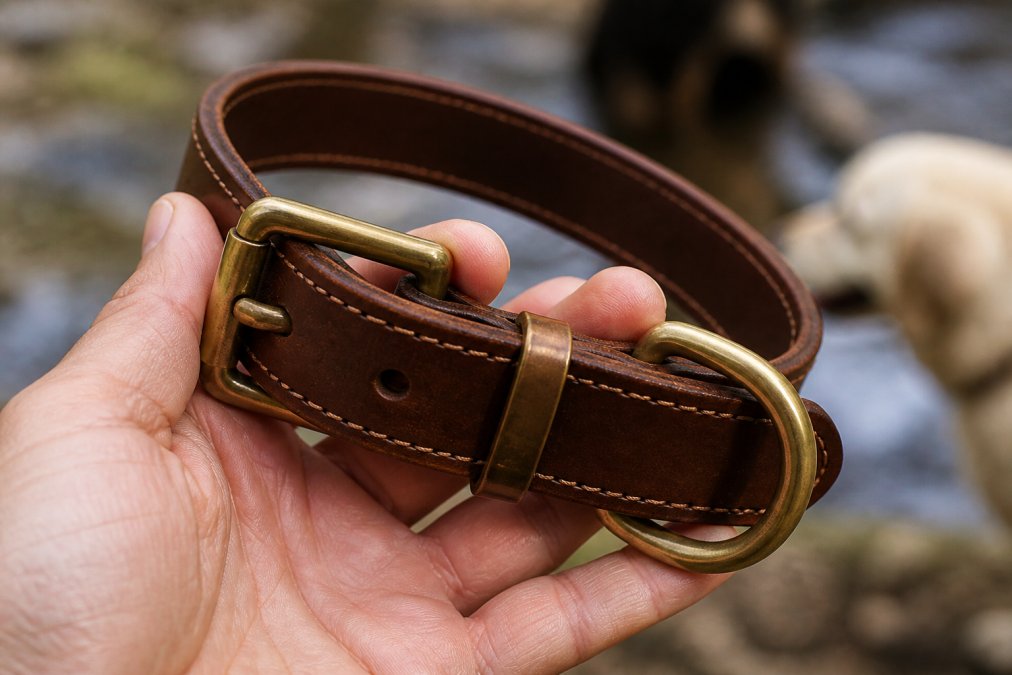
The core issue with budget pet gear is that manufacturers prioritize cost reduction over longevity. They use thin materials, weak adhesives, and hardware that corrodes or breaks under normal use. Premium pet gear takes the opposite approach: investing in materials that actually improve with age and hardware that withstands years of daily wear.
Vegetable-Tanned Leather and Natural Fibers
Vegetable-tanned leather is a prime example of how material choice determines lifespan. Unlike chrome-tanned leather (cheaper, faster to produce), vegetable-tanned leather develops a natural patina over time, a protective layer that actually strengthens the material (peer-reviewed research). This process takes months, which is why it costs more upfront. But here's what matters: that patina makes the leather more resistant to water, scratches, and general wear and tear.
Natural fibers like canvas and wool similarly outperform synthetic alternatives. Canvas doesn't degrade the way polyester does when exposed to UV light and moisture. Wool resists odor naturally through its protein structure, meaning pet bedding made from quality wool maintains freshness far longer than synthetic foam that traps bacteria and requires constant washing.
The trade-off is real: premium materials cost more to source and process. A vegetable-tanned leather dog harness costs significantly more than a nylon one. But the leather harness will still be functional after five years of daily use. The nylon harness will likely show stress fractures, fading, and material breakdown within 18 months.
Hardware Quality and Reinforced Stitching
Hardware, buckles, D-rings, snaps, and clasps, is where many budget pet products fail catastrophically. Cheap hardware rusts, breaks under tension, or simply stops functioning. Premium gear uses stainless steel or solid brass hardware that resists corrosion and maintains structural integrity through thousands of open-close cycles.
Stitching quality is equally critical. Budget manufacturers use thin thread and minimal stitch density, creating seams that separate under stress. Premium gear employs reinforced stitching with heavy-duty thread, often with double or triple-stitched seams at stress points. A premium pet carrier will have reinforced seams at every corner and attachment point, while a budget carrier has single stitching that fails when a dog pulls against the handle.
The Proud Pet Shop Bite-Proof Sofa Bed demonstrates this principle: the construction uses reinforced stitching throughout, paired with hardware designed for pets that actively test the durability of their gear. The combination means the bed maintains structural integrity even as pets jump on and off daily.

Durable Dog Gear for Outdoor Adventures
Durable dog gear for outdoor adventures requires materials and design features that handle environmental stress most pet owners never anticipate. Weather resistance, abrasion resistance, and functional design aren't luxuries, they're requirements when your dog is hiking, swimming, or spending hours outdoors.
Budget outdoor gear typically uses thin nylon with minimal waterproofing. After a few rainy walks, the material absorbs water, becomes heavy, and starts to degrade. Premium outdoor gear uses tightly woven fabrics with genuine waterproof coatings that shed water rather than absorb it. The difference in longevity is dramatic: a premium harness stays functional after 100 wet walks; a budget harness deteriorates after 10.
Reinforced attachment points matter enormously for outdoor gear. When a dog lunges, pulls, or gets tangled in brush, the stress concentrates at attachment points. Premium gear distributes that stress across reinforced areas with multiple stitching lines and hardware rated for high tension. Budget gear fails at these exact points because the stitching and hardware can't handle the load.
The Proud Pet Shop CloudLift Bed represents durable outdoor pet gear done correctly: the elevated design keeps pets off damp ground, the breathable mesh prevents moisture accumulation, and the reinforced frame withstands the weight and movement of active dogs across seasons. A budget outdoor bed would collapse or rot within a season.

How to Choose Long-Lasting Pet Carriers
Choosing a long-lasting pet carrier requires understanding the structural engineering that determines whether a carrier will last two years or ten. Most pet owners focus on size and price, missing the factors that actually predict longevity.
Evaluating Structural Design and Safety Standards
A long-lasting pet carrier begins with structural design that distributes weight evenly and resists deformation. The frame should use reinforced materials, metal or high-grade plastic, not thin walls that flex under load. When you pick up a quality carrier, it should feel rigid, not flexible.
Stress testing reveals the difference immediately. Apply downward pressure to the roof and walls of a premium carrier: it resists deformation. Do the same with a budget carrier and you'll feel movement and flexing that indicates the structure will eventually fail. That flexing creates micro-fractures in the material over time.
Safety standards like IATA certification indicate that a carrier has been tested for structural integrity, ventilation, and security (iata.org). Carriers meeting these standards are engineered to contain pets safely over many trips. Budget carriers often skip this testing entirely, meaning they're not proven to be safe or durable.
The latch mechanism is critical. Premium carriers use multiple locking points with hardware that maintains tension even after hundreds of open-close cycles. Budget carriers use single latches that loosen or fail, creating escape risks and eventually rendering the carrier unusable.
Weather Resistance and Seasonal Performance
A premium pet carrier maintains functionality across seasons and weather conditions. The material shouldn't degrade in sunlight, shouldn't become brittle in cold, and shouldn't absorb moisture that causes mold or mildew. Budget carriers often use materials that fail in these conditions: plastic that becomes fragile in freezing temperatures, ventilation that allows water intrusion, or materials that develop odor from trapped moisture.
Seasonal performance means the carrier is equally functional in summer heat and winter cold. Premium materials resist UV degradation, maintain flexibility in cold, and don't off-gas toxic fumes in heat. Budget materials often become dangerous in extreme temperatures, plastic carriers can release chemicals in heat, or become too brittle to safely contain a pet in cold.
Ventilation design also affects longevity. Premium carriers use ventilation that allows airflow without allowing weather intrusion. Budget carriers often have inadequate ventilation that leads to moisture buildup, mold growth, and material degradation. Over multiple seasons, this difference determines whether the carrier remains usable.
Maintenance Tips for Pet Gear Longevity
Premium pet gear lasts longer, but only if you maintain it correctly. Maintenance isn't complicated, but it's essential, it's the difference between a 5-year lifespan and a 10-year lifespan.
Leather gear requires periodic conditioning to maintain the material's flexibility and water resistance (the American Academy of Dermatology). Use a quality leather conditioner every 6-12 months, depending on use frequency. This prevents the leather from drying out and cracking, and it reinforces the natural protective properties. Wipe down with a damp cloth after wet use to remove salt and debris that accelerate degradation.
Fabric gear needs regular cleaning but not over-washing. Wash with mild detergent in cool water, air dry completely before storing. Over-washing with harsh chemicals breaks down fibers and degrades waterproof coatings. For gear with waterproof coatings, avoid high heat drying that can damage the coating.
Hardware requires minimal maintenance but benefits from occasional inspection. Check that all fasteners are tight, and if you notice rust or corrosion, clean with a wire brush or apply a protective oil. Stainless steel hardware rarely needs maintenance, but brass hardware develops patina that actually protects against corrosion.
Stitching inspection catches problems before they become failures. Examine seams regularly for loose threads or separation. If you catch a seam starting to separate, you can have it re-stitched before the entire seam fails. This single maintenance task can add years to the lifespan of gear that would otherwise be discarded.
Storage matters significantly. Store gear in a cool, dry place away from direct sunlight. UV light degrades materials faster than almost any other environmental factor. Don't store damp gear, dry completely first. Moisture trapped during storage leads to mold growth and material breakdown.
Cost-Per-Use: The Long-Term Value Calculation
Premium pet gear costs more upfront, but the cost-per-use calculation often reveals that premium gear is actually cheaper over time. This is the financial argument that converts skeptics: the math is straightforward.
A budget dog bed costs $40 and lasts 18 months with daily use. That's approximately $0.07 per day. A premium bed from Proud Pet Shop costs $99 and lasts 5 years with daily use. That's approximately $0.05 per day. The premium bed is cheaper per day of use, and it provides better comfort and durability throughout that entire period.
The calculation becomes even more favorable when you account for replacement frequency. Buying five budget beds over five years ($200 total) versus one premium bed ($99) reveals the real cost difference. But beyond the financial calculation, there's the environmental cost of replacing gear repeatedly, the inconvenience of constant purchases, and the reality that your pet experiences better comfort with higher-quality gear.
Multi-pet households see this advantage amplified. A household with three dogs will spend significantly less over five years buying premium gear once than buying budget gear repeatedly. The time saved on replacement shopping alone justifies the premium price for many pet owners.
The cost-per-use calculation also accounts for the fact that premium gear often performs better throughout its lifespan. A premium harness doesn't gradually degrade in functionality; it performs consistently until it reaches the end of its life. A budget harness gradually becomes less comfortable and less safe as materials degrade, meaning your pet experiences declining quality throughout its lifespan.
Repairability Versus Replacement
One critical advantage of premium pet gear is that it's often repairable, while budget gear typically isn't. This distinction matters because it extends the lifespan even further and reduces the total cost of ownership.
A premium leather collar with a broken D-ring can be repaired by replacing the hardware, a $15-30 fix. A budget collar with the same failure is typically discarded because the repair cost approaches the replacement cost. A premium harness with a separated seam can be re-stitched by a leather worker for $20-40. A budget harness with the same failure is unusable because the material quality doesn't support re-stitching.
Repairability depends on material quality and construction. Premium gear uses materials that accept repair without compromising integrity. Heavy leather, reinforced stitching, and quality hardware can all be replaced or repaired. Budget materials often can't be effectively repaired because the underlying material is too thin or too degraded to support new hardware or stitching.
The design philosophy behind premium gear often includes repairability as a feature. Manufacturers design seams and hardware attachment points in ways that allow replacement without requiring complete reconstruction. Budget gear is designed for minimum cost, not repairability, which means repairs often require rebuilding the entire product.
This repairability advantage compounds over time. A premium pet bed might be re-stitched once, have a zipper replaced, and have hardware upgraded, extending its useful life by years. A budget bed reaches the end of its functional life and is discarded. The premium bed becomes more valuable as you invest in repairs that maintain functionality.
Premium pet gear lasts longer because every component, from material selection to hardware to stitching, is engineered for durability rather than cost minimization. Understanding why premium gear outperforms budget alternatives helps you make purchasing decisions that reduce long-term costs and provide better comfort for your pets. At Proudpetshop, we focus on sourcing gear that delivers genuine durability: products like the Proud Pet Shop Bite-Proof Sofa Bed and CloudLift Bed are built with reinforced construction, quality materials, and hardware designed to withstand years of daily use. When you invest in durable pet gear, you're not paying more, you're paying once instead of repeatedly, and your pets benefit from better comfort throughout that extended lifespan. Start by evaluating material quality, hardware durability, and construction methods in your next purchase, and you'll see the difference premium gear makes.
Frequently Asked Questions
Q: What materials make pet gear more durable?
A: Premium pet gear relies on high-grade materials like vegetable-tanned leather, reinforced synthetic fabrics with high tensile strength, and stainless steel or powder-coated hardware. These materials resist abrasion, odor, and bacterial growth better than budget alternatives. Natural fibers develop a protective patina over time, while quality stitching and reinforced stress points prevent premature failure. The combination of these elements creates gear that withstands years of daily wear.
Q: Does premium pet gear save money in the long run?
A: Yes. Premium pet gear typically costs more upfront but lasts longer than budget options, resulting in lower cost-per-use over time. A premium dog bed like the Proud Pet Shop Bite-Proof Sofa Bed ($161.99) resists chewing and wear for years, while cheaper beds require replacement more frequently. Multi-pet households especially benefit from durability, as replacement costs add up quickly with multiple animals causing wear and tear.
Q: How can you tell if a pet carrier is high quality?
A: Inspect the frame for reinforced joints and solid construction that supports the carrier's weight without flexing. Check for weather-resistant, breathable materials and secure latches that won't fail under pressure. Quality carriers feature padding in high-contact areas for pet comfort and safety features like reflective visibility strips. Look for products tested against functional design standards and backed by manufacturer guarantees, indicators that the carrier has undergone stress-testing and quality assurance protocols.
Q: What are the signs of wear and tear in pet accessories?
A: Early warning signs include loose stitching, fading material, hardware corrosion, and loss of structural integrity. Premium gear shows gradual patina development and controlled wear, while budget items develop tears, peeling, and hardware failure within months. Functional design in quality accessories means wear occurs predictably in reinforced areas, allowing for targeted repairs rather than total replacement. Regular inspection of seams, hardware, and material condition helps identify when maintenance or repair is needed before failure.
This article was written using GrandRanker