
Table of Contents
- Why Fast Eating Leads to Vomiting in Dogs
- Dog Bloat Symptoms: When Vomiting Becomes an Emergency
- How to Stop a Dog From Eating Too Fast
- Best Slow Feeder Bowl for Dogs: What Actually Works
- Psychological Triggers and Breed Risks Behind Rapid Ingestion
- Long-Term Health Consequences of Chronic Fast Eating
- When to Call Your Veterinarian About Vomiting
- Frequently Asked Questions
Last Updated: October 3, 2026
Why Fast Eating Leads to Vomiting in Dogs
Can fast eating cause dog vomiting? Yes. When a dog inhales food in seconds, the stomach fills with air and unchewed kibble faster than it can process, often producing a pile of undigested food within minutes. This guide from Proudpetshop breaks down the mechanics, warning signs, and fixes.
The Mechanics: Swallowed Air, Undigested Kibble, and Stomach Upset
Rapid ingestion means swallowing food with little or no chewing, changing two things at once.
First, your dog swallows air with every gulp (aerophagia), filling the stomach with gas.
The stomach stretches. Pressure builds. Within 10 to 30 minutes, the dog regurgitates a tube-shaped pile of food.
That is the key difference: regurgitation is passive and quiet, while true vomiting involves retching, abdominal contractions, and often yellow bile or foam.
Dog Bloat Symptoms: When Vomiting Becomes an Emergency
Dog bloat symptoms are not a simple upset stomach. Bloat, or gastric dilatation-volvulus (GDV), is a life-threatening emergency in which the stomach fills with gas and twists, cutting off blood flow. Watch for:
- A hard, swollen, drum-like belly
- Unproductive retching with nothing coming up
- Pacing, restlessness, or inability to lie down
A dog with these signs needs a vet immediately. Do not wait to see if it passes.
Gastric Dilatation-Volvulus (GDV): The 30-Minute Window
GDV kills fast: the twisted stomach traps gas and cuts circulation, tissue dies within a short window, and without veterinary intervention the outcome is often fatal.
Large, deep-chested breeds carry the highest risk. The American College of Veterinary Surgeons lists deep-chested dogs and a single large daily meal as major risk factors.
One big meal a day in a deep-chested dog is a recipe for trouble. Split the food and slow the pace.
How to Stop a Dog From Eating Too Fast
Learning how to stop a dog from eating too fast starts with changing the shape of the meal, not just the bowl. In order:
- Split meals. Feed two or three smaller portions instead of one large one.
- Switch to a slow feeder. Ridges and grooves force your dog to work for each bite.
- Add a foraging mat. Scattering kibble across a mat turns gulping into sniffing.
- Use a puzzle feeder. A treat dispensing ball or puzzle box makes your dog think.
- Wet the food. Adding water slows the bite and adds moisture.
- Separate multi-pet meals. Competition drives food aggression and faster eating.
- Feed after exercise, not before. A calm dog eats slower than a wired one.
Most owners see a real change within a week.
Best Slow Feeder Bowl for Dogs: What Actually Works
The best slow feeder bowl for dogs is one your dog cannot flip, tip, or finish in under two minutes, exactly what our Slow-Feeding System solves.

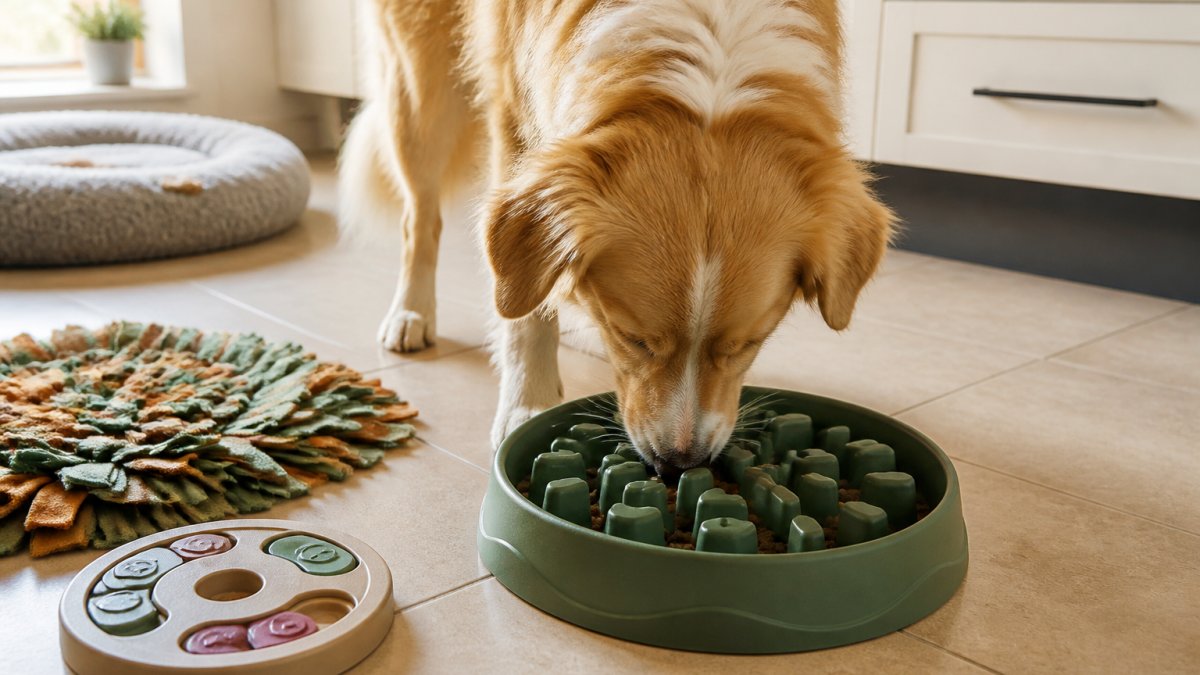
The Proud Pet Shop Slow-Feeding System is a 3-piece set in food-grade, BPA-free silicone.
It is dishwasher safe, which matters more than most owners expect: a slow feeder that is hard to clean gets abandoned after two uses.
For dry kibble, our Proud Pet Shop Sniffing Petal Mat hides food between folded felt petals so your dog sniffs out each piece, slow eating and mental stimulation in one step.

| Tool | Best For | Slows Eating By | Cleaning |
|---|---|---|---|
| Slow-feeding silicone mat | Wet food, anxious eaters | High | Dishwasher safe |
| Sniffing petal mat | Dry kibble, boredom | High | Machine washable |
| Puzzle feeder | Curious, fast dogs | Medium to high | Dishwasher safe |
| Standard bowl | Calm, slow eaters | None | Hand wash |
Puzzle Feeders, Snuffle Mats, and Lick Mats Compared
Each tool targets a different trigger. A lick mat soothes an anxious dog through repetitive licking. A snuffle mat works the nose.
The Proud Pet Shop IQ Treat Puzzle has adjustable difficulty, a non-slip base, and is dishwasher safe, start easy and raise the challenge as your dog learns.
In multi-pet homes, the Proud Pet Shop Automatic Feeder dispenses up to four adjustable meals a day, keeping one dog from stealing another's food.

Psychological Triggers and Breed Risks Behind Rapid Ingestion
Speed is not always about hunger. It is often a learned behavior with a specific trigger, and identifying that trigger separates a lasting fix from a slow feeder your dog defeats in a week.
The Four Root Causes of Speed Eating
1. Competition in a multi-pet home. The most common trigger: a dog eating next to another learns the bowl may be empty before it finishes.
**2.
3. Resource guarding. A dog that guards its bowl eats fast because it expects a challenge.
4. Anxiety and environmental stress. A dog that eats fast only during thunderstorms, with guests over, or after a schedule change is stressed, not hungry.
Breed Predispositions You Should Know
Breed matters for two separate reasons: anatomy and drive.
Proud Pet Shop Sniffing Petal Mat →
Deep-chested breeds carry the highest gastric dilatation-volvulus (GDV) risk because the chest shape lets the stomach rotate more easily when distended.
High-drive working and sporting breeds eat fast for a different reason. Labrador Retrievers, Golden Retrievers, Beagles, Border Collies, and most terriers were bred to work and eat quickly before the next task.
Flat-faced (brachycephalic) breeds such as Bulldogs, Pugs, and Boston Terriers have a separate problem: shortened airways make it harder to breathe and swallow at once, so fast eating raises choking and aspiration risk.
Dietary Texture: The Factor Most Owners Overlook
How the food is shaped changes how fast it goes down.
- Small kibble is swallowed with less chewing than large kibble. If your dog gulps, sizing up the kibble can slow the meal before you buy new equipment.
- Large, flat kibble forces more chewing per piece, which is why some veterinary diets are shaped specifically for dental and pacing benefits.
- Wet food moves through the stomach faster than dry food and is less likely to form the tube-shaped regurgitation pile, but it does not slow eating speed, a dog can lap wet food just as fast as it crunches kibble.
Long-Term Health Consequences of Chronic Fast Eating
One fast meal is not a crisis. Years of them are, the damage builds quietly before showing up as a visible symptom.
Esophageal Irritation and Acid Damage
Every regurgitation sends stomach acid up the esophagus, which is not built to handle acid the way the stomach lining is. Repeated exposure irritates the tissue and can eventually narrow the passage or cause scarring.
The early sign is subtle: weekly regurgitation becomes regurgitation after every meal. Later, the dog coughs or gags shortly after eating even softened food, a signal to see a veterinarian, since esophageal changes are easier to manage early.
Nutrient Malabsorption
Food that comes back up never gets digested. A dog that regurgitates regularly loses calories, protein, and fat before the body can use them, so it eats enthusiastically, finishes every meal, and still looks thin or loses weight.
A common pattern: a dog eats two cups a day, regurgitates a third, and slowly drops condition over months. Bloodwork looks normal because the dog is not sick, it is simply not absorbing what it eats.
Digestive Stasis and Fermentation
When food sits in the stomach instead of moving through, it ferments. Gas builds, the stomach stays distended, and gastric motility slows. Affected dogs look bloated after meals, pass more gas, and have soft or inconsistent stools.
Chronic stasis also shifts the gut's bacterial balance, setting up a cycle of intermittent vomiting, appetite changes, and repeated vet visits that never resolve because the root cause, meal speed, was never addressed.
Obstruction and Choking Risk
A dog that gulps without chewing can swallow kibble, a treat, or a non-food object whole. Most of the time it passes; sometimes it lodges.
The esophagus is the most common spot for a food bolus to stick; signs include repeated swallowing, gagging, drooling, and white foam. A true stomach or intestinal obstruction causes vomiting, appetite loss, and abdominal pain and needs veterinary intervention, not a home remedy.
What Owners Actually Notice First
The long-term damage rarely announces itself. The pattern usually looks like this:
- Occasional regurgitation after meals, dismissed as a one-off.
- Regurgitation becomes weekly, then daily.
- The dog starts losing weight despite eating normally.
- Stools become inconsistent and gas increases.
- A vet visit rules out infection and parasites, and the conversation turns to meal speed and diet.
Catching the pattern at step one is the point of slowing the meal. These tools are not just about a cleaner floor, they protect the esophagus, stomach, and gut from years of avoidable wear.
When to Call Your Veterinarian About Vomiting
Call your vet the same day if you see any of these:
- Vomiting more than two or three times in a day
- Blood in the vomit or a dark, coffee-ground look
- A swollen, painful belly
- Unproductive retching with nothing coming up
Vomit color tells you a lot. Yellow or foamy usually means an empty stomach.
A single episode of regurgitated food in an otherwise happy dog is usually not an emergency.
Fast eating is one of the easiest problems to fix, and one of the most dangerous to ignore.
At Proudpetshop, we stock the tools that actually change the pace: our slow-feeding silicone system, the sniffing petal mat, and the adjustable IQ treat puzzle.
Get started with Proudpetshop and turn mealtime from a race into a calm, healthy routine.
Frequently Asked Questions
Why is my dog vomiting after eating?
Fast eating is a common cause. When a dog gulps kibble, they swallow air (aerophagia), which distends the stomach and can trigger regurgitation of undigested food within minutes to an hour after the meal. The vomit often looks like whole, unchewed kibble. If this happens repeatedly, try a slow feeder bowl or snuffle mat to extend mealtime. If your dog also shows dog bloat symptoms like a distended abdomen, retching without producing vomit, or restlessness, contact your veterinarian immediately.
Is it dangerous for a dog to eat too fast?
Yes. Beyond simple vomiting, rapid ingestion is a known risk factor for gastric dilatation-volvulus (GDV), or bloat, especially in deep-chested breeds. GDV is a life-threatening emergency that can develop within hours. Fast eating also reduces nutrient absorption because food moves through the gastrointestinal tract before it is properly broken down. Using a slow feeder bowl for dogs or a puzzle feeder slows consumption and lowers these risks while providing mental stimulation.
What are the signs of bloat in dogs?
Dog bloat symptoms include a visibly swollen or hard abdomen, dry heaving or retching without producing vomit, pacing and restlessness, excessive drooling, and signs of abdominal discomfort when touched. These can progress to collapse. Bloat is a medical emergency: if you see these signs, go to a veterinary hospital immediately. Do not wait to see if your dog improves. Early intervention is critical for survival.
How can I stop my dog from eating too fast?
Start by switching from a standard bowl to a slow feeder bowl for dogs, a snuffle mat, or a puzzle feeder. These tools force your dog to work for each bite, extending a 30-second meal to several minutes. You can also split meals into smaller, more frequent portions and avoid feeding right after intense exercise. For dogs with anxiety-driven eating, a lick mat with wet food can promote calm licking instead of gulping. Consistency matters: use the slow feeder at every meal.