
Table of Contents
- What Makes a Dog Collar Durable Enough for a Heavy Puller
- Collar Types for Dogs That Pull: Martingale vs. Standard vs. No-Pull
- Choosing a Heavy-Duty Dog Collar for Large Dogs
- Why a Wide Dog Collar for Strong Dogs Distributes Pressure Better
- How a Martingale Collar for Dogs That Pull Works (and Its Limits)
- When a Dog Harness for Strong Pullers Beats Any Collar
- Fit, Sizing, and Maintenance for Long-Term Durability
- Frequently Asked Questions
Last Updated: October 18, 2026
What Makes a Dog Collar Durable Enough for a Heavy Puller
Durable dog collars for heavy pullers are built with reinforced stitching, metal hardware, and a material that resists stretching under load. Most collars fail at the buckle or the stitch line, not the strap itself.
That gap matters. A collar that fails mid-walk can let a dog back out and bolt, which is why escape prevention belongs in any buying decision. Below, we break down what separates a genuinely heavy-duty dog collar for large dogs from a decorative one, and where a pulling-control tool should take over.
Materials, Stitching, and Hardware That Hold Up
Nylon webbing and leather are the two workhorse materials, and both hold up well when the stitching is right. Look for box-X stitching at stress points, not single-line seams. Hardware is where corners get cut: plastic buckles crack under sudden tension, while welded steel D-rings and solid brass buckles resist bending. A common mistake is judging a collar by strap thickness alone. The weak link is almost always the buckle or the leash attachment point.
Collar Types for Dogs That Pull: Martingale vs. Standard vs. No-Pull
Three collar types dominate the pulling conversation, and each solves a different problem. A standard flat collar is for holding ID tags and everyday wear, not for controlling a determined puller. A martingale collar tightens slightly when the dog pulls, which helps prevent backing out. A no-pull training collar, including head halters and front-clip designs, redirects forward momentum rather than fighting it.

| Collar Type | How It Works | Best For | Main Limitation |
|---|---|---|---|
| Standard flat collar | Fixed circumference, holds tags | Calm dogs, ID | No pull control |
| Martingale collar | Limited tightening when tension is applied | Dogs that slip collars | Not a training fix alone |
| No-pull / head halter | Redirects or turns the head | Strong, reactive pullers | Needs gradual conditioning |
The key distinction most guides miss: a durable collar keeps your dog secure, but it does not teach loose-leash walking. Those are two different jobs.
Choosing a Heavy-Duty Dog Collar for Large Dogs
Fit and sizing decide whether a heavy-duty dog collar for large dogs actually works, and most guides stop at "leave room for two fingers." That single check is not enough for a dog that lunges. A collar that fits a calm dog can still be too loose the moment a strong dog plants its feet and pulls backward, and a collar sized at the top of its range has no adjustment left when the buckle is under load.
How to Measure a Powerful Dog's Neck
Use a soft tailor's tape, not a rigid ruler, and measure the widest part of the neck, usually just behind the ears and jaw, not down at the shoulders where a collar naturally settles. Keep the tape snug against the fur but not compressed.
Then add slack based on the dog's build:
- Smooth-coated breeds: add about 2 inches to the measured neck circumference.
- Thick-coated or thick-necked breeds: add about 2 to 3 inches, because fur compresses and a wide neck needs more clearance.
- Dogs between sizes: always size up. A collar that sits on the last hole is already at maximum strain, and the buckle and D-ring take the full load of a lunge.
Write the measurement down and compare it to the collar's stated range, not just its "size" label. Two manufacturers can label the same 18-inch collar as a medium and a large.
The Fit Checks That Matter for a Heavy Puller
Put the collar on and run three checks before you trust it on a walk:
- The two-finger check. You should be able to slide two fingers flat under the band at the top of the neck. One finger means too tight; three or more means too loose.
- The pull-back check. With the dog standing calmly, gently pull the collar backward over the head. A properly fitted flat collar should not slide off. If it does, the collar is too loose or the dog has a narrow head and needs a martingale or a harness.
- The load check. Attach the leash and have a helper apply steady, moderate tension while you watch the buckle and D-ring. The strap should not stretch visibly, the buckle should not distort, and the D-ring should stay seated. Stop immediately if any hardware flexes.
Width, Weight, and Contact Area
For powerful breeds, prioritize adjustability and a wide contact area over a thin strap that digs in. A wider band spreads force across more of the neck, while a narrow strap concentrates pressure at the throat during a lunge.
A practical rule: if your dog's neck measures within 1 inch of the collar's upper limit, move up a size. The extra adjustment is not cosmetic, it is the margin that keeps the hardware from taking the full shock of a sudden pull.
Why a Wide Dog Collar for Strong Dogs Distributes Pressure Better
A wide dog collar for strong dogs spreads pulling force across more of the neck, which reduces the concentrated pressure that narrow straps create. That wider surface lowers the risk of tracheal compression and skin irritation during sudden lunges.
Padded linings add comfort on long walks and help prevent friction hot spots. If your dog wears a collar all day, breathable padding keeps the neck cooler and drier underneath. The trade-off is a little extra weight, which rarely matters on a large dog.
Proud Pet Shop No-Pull Adventure Harness →
How a Martingale Collar for Dogs That Pull Works (and Its Limits)
A martingale collar for dogs that pull uses a limited-slip design: two loops, one around the neck and one that tightens the first when tension is applied. It stops most dogs from backing out of the collar, which is its real strength. It does not stop pulling on its own.
The limit is behavioral. A martingale manages escape risk; it does not train a dog to walk politely. Pair it with consistent leash training, and never let it tighten to the point of choking.
When a Dog Harness for Strong Pullers Beats Any Collar
A dog harness for strong pullers wins whenever the goal is control without neck pressure. Front-clip harnesses redirect pulling force onto the chest, turning the dog gently back toward you instead of straining the throat.
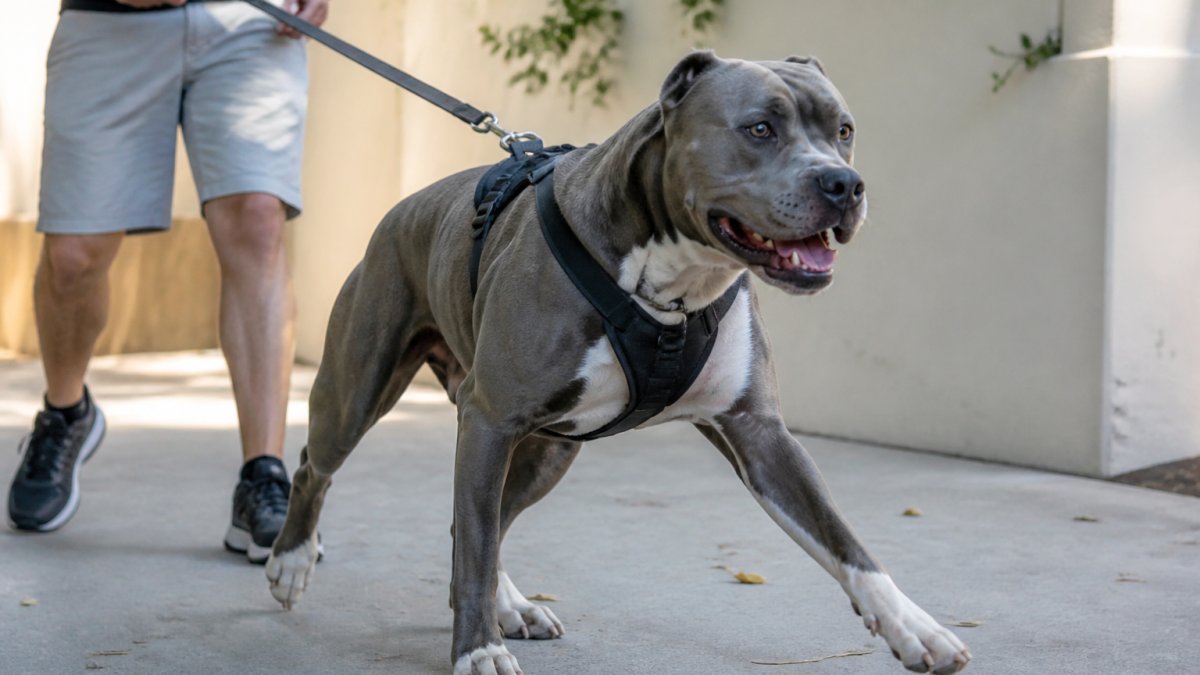
Our No-Pull Adventure Harness is built exactly for this: a front-clip attachment that redirects pulling force forward, a breathable padded lining to cut friction, sizes from XS to XL, and reflective stitching for low-light walks.
Fit, Sizing, and Maintenance for Long-Term Durability
Durability in durable dog collars is not just about how they are made. It is how the material and hardware hold up after months of weather, water, dirt, and repeated tension. Most buying guides treat maintenance as an afterthought, but the material you choose determines what care it needs, and how long the collar will actually last on a heavy puller.
How Materials Handle Weather, Water, and Wear
| Material | Water and Moisture | Dirt and Odor | Long-Term Wear Pattern | Care Routine |
|---|---|---|---|---|
| Nylon webbing | Absorbs some water; dries slowly if left on | Holds dirt in the weave; can develop odor | Stitching frays first; webbing can stretch slightly under constant load | Rinse after wet or muddy walks, air-dry fully, inspect stitch lines monthly |
| Leather | Softens and darkens when wet; can crack if dried too fast | Wipes clean; can stain | Cracks at flex points; stitching loosens if soaked repeatedly | Wipe with a damp cloth, condition occasionally, never machine wash |
| Coated or waterproof webbing | Sheds water; dries fast | Wipes clean; resists odor | Coating can peel at cut edges over time | Wipe down, check edges for peeling |
| Metal hardware (steel, brass) | Steel can rust if scratched; brass patinas | Traps grit at the D-ring joint | Plating wears; rings can bend under extreme load | Dry after water contact, check for cracks and bent rings each season |
| Plastic buckles | Unaffected by water | Easy to rinse | Can crack under sudden tension, especially in cold weather | Inspect for hairline cracks; replace at first sign |
A common pattern is that nylon collars fail at the stitch line, leather collars fail at flex points, and plastic buckles fail at the latch, which is why the care routine should match the weak point, not just the strap.
The Maintenance Routine That Extends Collar Life
Check the fit monthly, since weight changes and fur growth shift the measurement. Rinse nylon collars after muddy or wet walks and dry them fully, because trapped moisture breaks down stitching over time. Inspect the hardware each season for cracks, rust, or bent rings. For water-loving dogs, avoid leaving a soaked collar on for hours, take it off, dry it, and let the neck dry too.
A simple quarterly routine covers most of it:
- Weekly: wipe the band and D-ring with a damp cloth after dirty walks.
- Monthly: re-check fit with the two-finger and pull-back checks; look for frayed stitching at the D-ring.
- Seasonally: inspect buckles for hairline cracks, check metal for rust or bending, and replace any hardware that flexes.
- After every soaking: remove the collar, rinse if muddy, and air-dry completely before putting it back on.
When to Retire a Collar
Replace a collar when stitching is visibly frayed at the D-ring, when the buckle shows cracks or does not latch firmly, when a metal ring is bent or heavily rusted, or when the webbing has stretched enough that the fit no longer holds. A well-made collar cared for this way can last years; a neglected one can fail in a single season.
Frequently Asked Questions
What type of collar is best for a dog that pulls hard?
For a dog that pulls hard, a wide, well-padded collar with a strong metal buckle spreads force across the neck better than a thin nylon strap. A martingale collar for dogs that pull adds limited tightening so the dog cannot back out, but it is not a training fix on its own. Many owners pair a durable collar for ID tags with a front-clip harness for walks, so the neck stays free of leash tension while the chest takes the load.
Are wide collars better for large dogs that pull?
Yes, in most cases. A wide dog collar for strong dogs spreads pressure over a larger area of the neck, which reduces the concentrated force a narrow strap puts on the trachea and skin. Look for a width of about 1.5 to 2 inches on large breeds, plus padded lining and reinforced stitching. Width alone does not stop pulling, but it makes the collar safer and more comfortable during daily wear.
Should a strong puller wear a collar or a harness?
A harness is usually the better walking tool for a strong puller because it moves leash tension off the neck and onto the chest. A front-clip harness like the Proud Pet Shop No-Pull Adventure Harness ($37.99) redirects forward motion and comes in sizes XS to XL with reflective stitching. Keep a durable collar on for ID tags and backup leash attachment, and use the harness for the actual walk.
How often should I replace a heavy-duty dog collar?
Check a heavy-duty dog collar every month for frayed stitching, cracked nylon, rusted hardware, or a buckle that no longer clicks firmly. Replace it immediately if any of these appear, since a failed buckle on a strong dog is a real escape risk. With regular cleaning and drying after wet walks, a quality collar can last a year or more, but heavy pullers wear through faster than average dogs.
Every heavy puller deserves gear that holds up, and every owner deserves a walk without the tug-of-war. At Proudpetshop, we back our adventure gear with a 30-day satisfaction guarantee, free shipping on orders over $50, and a 4.8/5 rating from over 1,200 pet parents. Start with the No-Pull Adventure Harness and give your strong dog the control and comfort that lasts.