
Table of Contents
- The Reality: Are Truly Indestructible Dog Collars Possible?
- Understanding Chew-Proof Dog Collars and Their Limits
- Biothane Dog Collar Benefits for Heavy Chewers
- Materials That Actually Resist Damage
- How to Choose a Durable Dog Collar That Lasts
- Beyond the Collar: Preventing Destruction and Damage
- Conclusion
- Frequently Asked Questions
Last Updated: September 23, 2026
The Reality: Are Truly Indestructible Dog Collars Possible?
The short answer is no. No collar is truly indestructible. Even the most durable dog collars will eventually show wear, fray, or fail under extreme conditions. But that doesn't mean the search for a long-lasting, chew-proof dog collar is pointless. What matters is finding a collar that resists damage far longer than standard options and holds up to your dog's actual behavior.
We understand the frustration of buying collars only to watch your dog destroy them in weeks. The difference between a collar that lasts six months and one that lasts two years often comes down to material choice, hardware quality, and design. An indestructible dog collar doesn't exist, but a truly durable one does, and it's worth the investment.
The real question isn't whether indestructibility is possible. It's whether you're choosing materials and construction methods that maximize longevity for your specific dog's chewing habits and lifestyle.
Understanding Chew-Proof Dog Collars and Their Limits
Chew-proof dog collars are designed to resist damage from persistent chewing, but calling them "chew-proof" oversells what they can do. What these collars actually offer is resistance to the most common sources of damage: saliva, friction, UV exposure, and moderate to heavy chewing.
To understand what makes a collar chew-resistant, it helps to know how collars actually fail. Most failures fall into three categories:
Material breakdown. Standard nylon collars fray because the fibers separate when chewed or rubbed. The fibers absorb saliva, which weakens the material further. Within weeks of heavy chewing, the collar develops visible fraying at the edges and seams. Biothane and rubber-coated materials resist this because the coating seals the fibers and prevents moisture absorption.
Hardware failure. The D-ring, buckle, or adjustment mechanism fails before the collar material does. Plastic buckles crack under pressure or repeated chewing. Cheap metal D-rings rust or bend out of shape. Poorly riveted hardware separates from the collar body. This is often the first failure point, even on collars with durable fabric.
Seam separation. Single-stitched seams fail when a dog pulls hard or chews at the stress points where the D-ring attaches or where the collar closes. The thread breaks, the stitching unravels, and the collar loses structural integrity. Double or triple stitching with heavy-duty thread resists this much longer.
The key limitation is this: no material is completely resistant to a determined dog. A dog that chews obsessively for hours can eventually damage even the most resilient collar. However, chew-proof dog collars significantly extend the time before visible damage appears by addressing one or more of these failure modes.
Most standard nylon collars can fail within weeks under heavy chewing because all three failure modes can occur simultaneously. Chew-proof alternatives use materials that don't fray, resist moisture, and maintain structural integrity under sustained pressure. The trade-off is often cost: durable collars can cost more upfront but may deliver better value over time when they last longer instead of months.
Biothane Dog Collar Benefits for Heavy Chewers
Biothane is a synthetic rubber-coated nylon material that has become the standard for heavy-duty collars. Understanding why biothane works so well helps you evaluate whether it's the right choice for your dog.
Biothane resists fraying because the rubber coating seals the edges. It doesn't absorb saliva or sweat the way fabric collars do, which means it won't develop odor or harbor bacteria. The material is also waterproof, making it ideal for dogs that spend time in water or muddy environments. Biothane dog collar benefits include durability in outdoor conditions and easy cleaning, you can rinse it with water and it dries quickly.
The main drawback is that biothane can feel stiff initially and may chafe sensitive skin if the collar isn't properly fitted or broken in. It's also heavier than some fabric alternatives, which matters for small dogs or dogs with neck sensitivity.
For heavy chewers, biothane is one of the best options available. It resists punctures and tears better than leather or standard nylon. A well-made biothane collar can last for years with proper care, even with a dog that chews regularly.
Materials That Actually Resist Damage
Several materials have proven track records for durability. Knowing the strengths and weaknesses of each helps you choose based on your dog's specific needs.
Biothane: As discussed, this is the gold standard for chew resistance. The rubber coating prevents fraying and moisture absorption. Biothane collars work well for dogs that chew, swim, or spend time outdoors.
Nylon with heavy-duty hardware: Standard nylon frays easily, but nylon with reinforced stitching and high-quality metal hardware (stainless steel or nickel-plated) can last longer than expected. The hardware is often the weak point, cheap plastic buckles fail quickly.
Leather: Real leather develops character over time and can last for years, but it's not ideal for heavy chewers. Leather absorbs saliva and can develop mold or mildew. It also requires regular conditioning to prevent cracking. Faux leather offers some durability benefits without the maintenance, though it's less breathable.
Rubber-coated materials: Beyond biothane, other rubber-coated options exist. They share similar benefits: water resistance, no fraying, and easy cleaning. Quality varies widely between manufacturers.
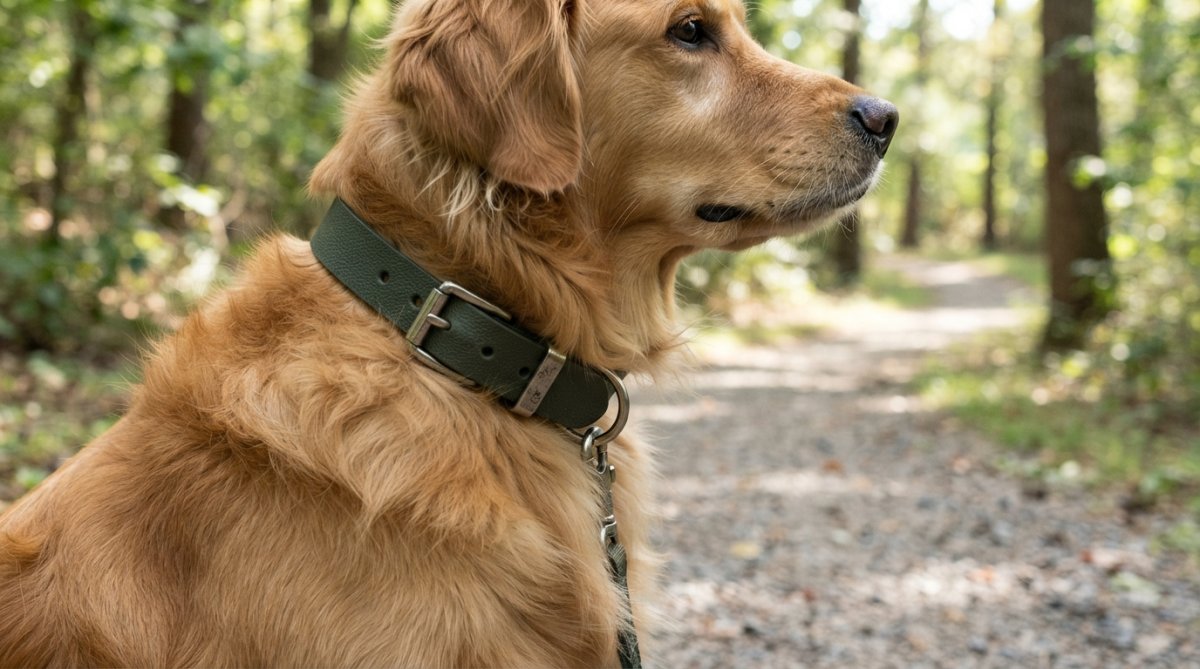
The common mistake is assuming price alone determines durability. A quality biothane collar can outlast a nylon collar with cheap hardware. Material matters more than price point.
How to Choose a Durable Dog Collar That Lasts
Selecting a durable dog collar requires evaluating several factors beyond material. Rather than treating all criteria equally, prioritize them based on your dog's specific behavior and environment.
Start with material and hardware, these are non-negotiable. Stainless steel and nickel-plated hardware resist rust and corrosion. Plastic buckles fail quickly, often within months of regular use. D-rings should be welded or riveted, not glued or soldered. Cheap hardware fails first, even when the collar material is solid. If you're choosing between a biothane collar with plastic hardware and a nylon collar with stainless steel hardware, the nylon option will likely last longer.
Examine the stitching pattern at stress points. Look for double or triple stitching, especially where the D-ring attaches, where the collar closes, and along the edges. Single-stitched collars fail sooner under pulling or chewing pressure. The thread should be heavy-duty nylon or polyester, not thin cotton. Run your finger along the seams: they should feel tight and even. Loose or uneven stitching indicates poor construction.
Evaluate width based on your dog's size and behavior. Wider collars (1.5 inches or more) distribute pressure more evenly and tend to be more durable than narrow ones. They're also more comfortable for most dogs and less likely to cause neck irritation. However, very small dogs (under 10 pounds) may need narrower options for comfort. If your dog pulls hard on the leash, a wider collar will resist deformation better.
Test the material feel before purchasing. Biothane should feel firm but not brittle or cracked. Nylon should be tightly woven with no loose fibers. Leather should be supple and smooth, not stiff, cracked, or peeling. If you're buying online, check the return policy in case the material quality doesn't match the description.
Assess the closure system for reliability. Adjustable buckles reinforced with metal are more reliable than simple plastic slides. Side-release buckles (the kind used on tactical gear) are stronger than traditional pin-lock designs and less likely to accidentally open.
Beyond the Collar: Preventing Destruction and Damage
Even the most durable collar will fail faster if your dog chews on it constantly. Reducing the behavior extends the life of any collar, regardless of material.
Conclusion
An indestructible dog collar doesn't exist, but a genuinely durable one does. The key is choosing collars made from materials like biothane that resist fraying and moisture, paired with heavy-duty hardware and quality stitching. A well-made collar can last for years even with a dog that chews regularly.
Frequently Asked Questions
What material is best for an indestructible dog collar?
Biothane, heavy-duty nylon webbing, and reinforced leather with stainless steel hardware offer the best resistance to chewing. Biothane is particularly effective because it's waterproof, non-absorbent, and lacks the texture that encourages chewing. However, no collar is truly indestructible, determined chewers can damage any material over time. The key is choosing hardware that won't corrode and webbing thick enough to resist puncture.
Are biothane dog collar benefits worth the cost?
Yes, if your dog is a heavy chewer. Biothane collars resist moisture, mold, and the texture that attracts chewing, making them last significantly longer than standard nylon. They're also easier to clean and maintain. While pricing varies, the durability can often mean fewer replacements, potentially reducing long-term costs. They're especially valuable for dogs that spend time outdoors or in wet environments.
How do I stop my dog from chewing through their collar?
Start by choosing a durable collar material like biothane or reinforced nylon, but also address the underlying behavior. Provide appropriate chew toys, ensure adequate exercise, and redirect chewing behavior when you catch it. Some dogs chew collars due to boredom, anxiety, or discomfort. If your dog is destroying collars, consult your veterinarian to rule out skin irritation or other medical issues, and consider working with a trainer on impulse control.
What's the difference between a durable dog collar and an indestructible one?
A durable collar resists damage longer and withstands normal wear, while an indestructible collar theoretically cannot be damaged, which doesn't exist in reality. Even the toughest collars will eventually fail under sustained chewing, pulling, or exposure. The best approach is choosing the most durable collar available for your dog's behavior and environment, then pairing it with training and supervision to extend its lifespan.